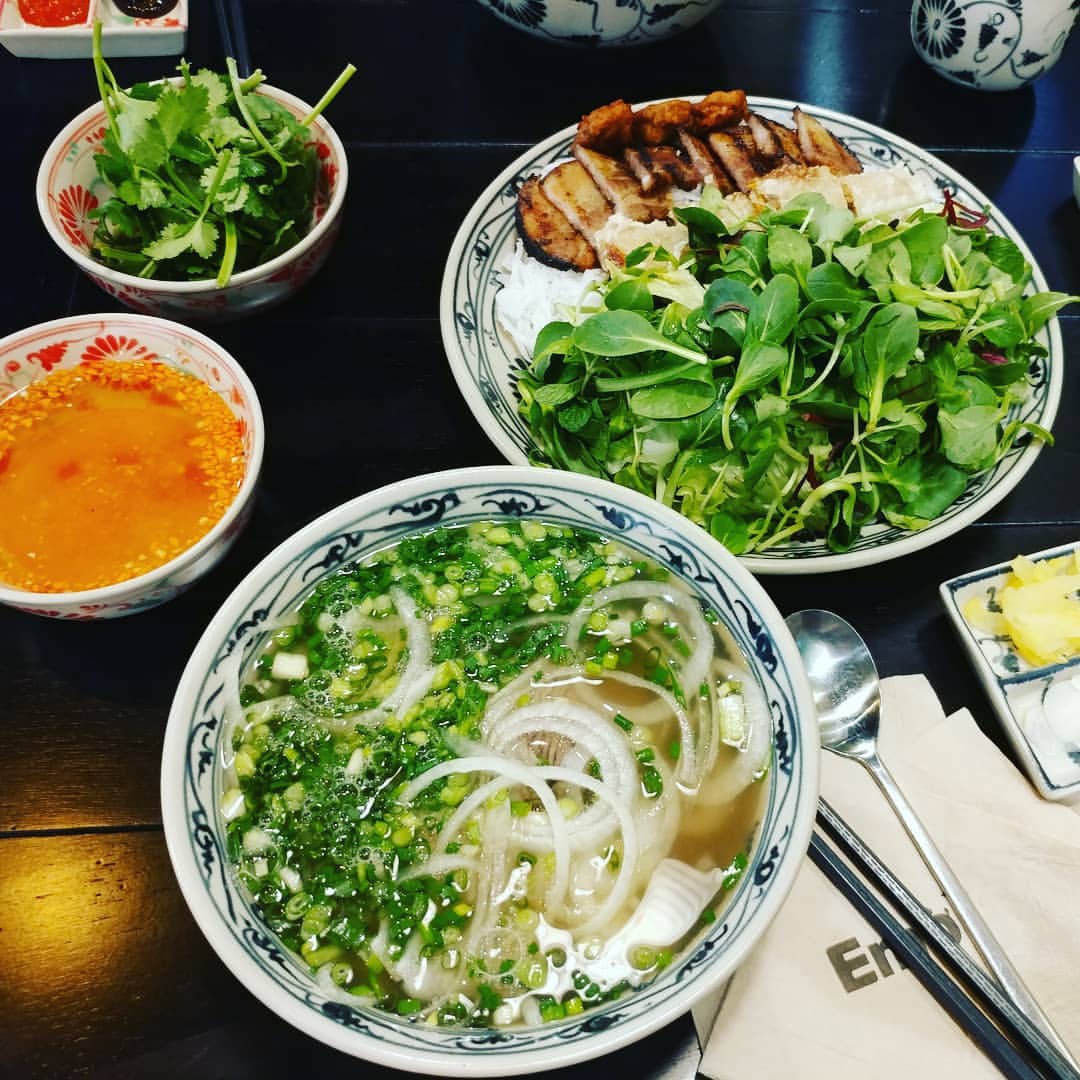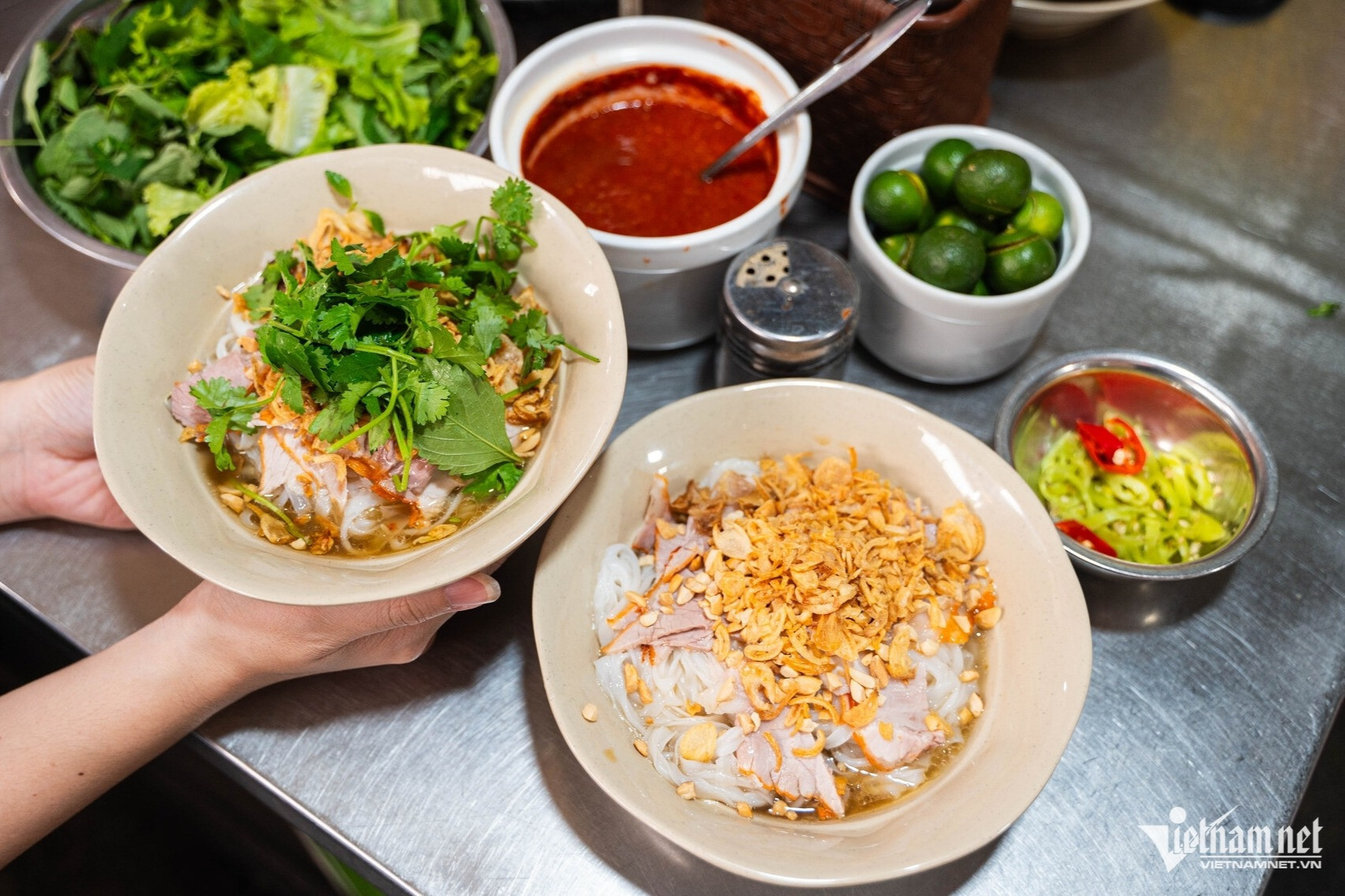
According to some diners, the addition of beef ribs and kimchi to Pho Thin in My Dinh area (Hanoi) is losing the traditional flavor.
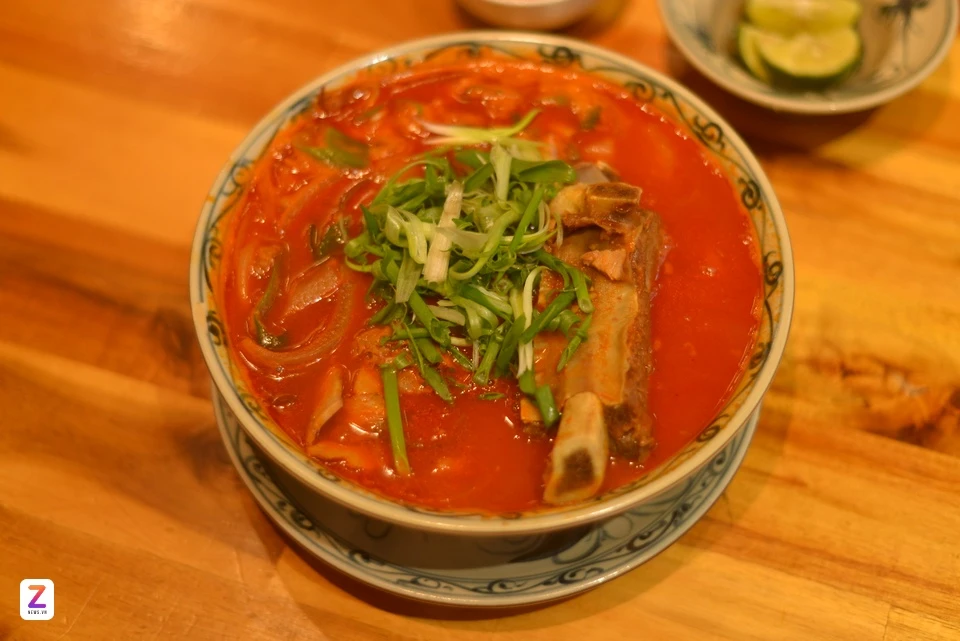
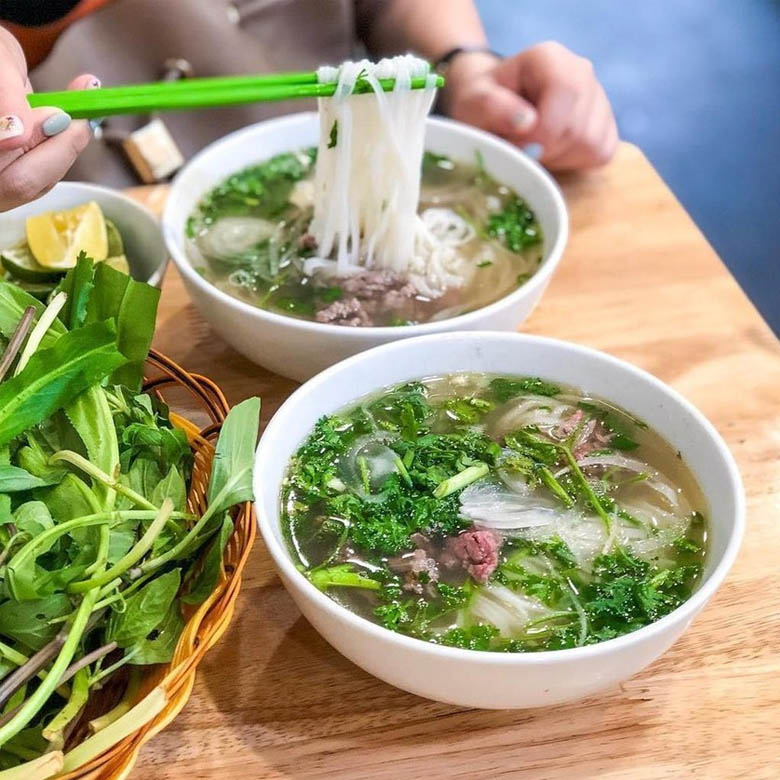
After enjoying pho at Pho Thin restaurant in My Dinh, Mr. Doan Hieu Minh (Hanoi) said that the pho at the restaurant has a different broth from the flavor of traditional Vietnamese pho. Food portions are also larger, a bowl of pho costs 149,000 VND.
"The main ingredient is still pho, but the rest is not. I can't get enough of this bowl of pho. The broth has a strong kimchi flavor and is red in color. Lots of lemongrass, lots of onions, plus kimchi. The beef is replaced by a Korean-style beef rib stew," Mr. Hieu Minh shared on social networks.
It is known that this pho restaurant is located in an area where many Koreans work and settle. The representative is Mr. Le Chi Dung, General Director of Pho Thin Hanoi Investment and Development Joint Stock Company.
Initially, Mr. Dung bought the franchise from Mr. Nguyen Trong Thin (owner of Pho Thin 13 Lo Duc) from June 2019. But after a short time in business, Mr. Dung realized that the shop did not have brand rights as committed. Therefore, the company has developed and expanded the restaurant scale, as well as created Korean beef tripe pho and Korean beef rib pho.
Concerned about losing traditional flavors
Customer Gia Han (34 years old, Hanoi) believes that a shop operating in an area with a large concentration of Koreans living, needs to keep the traditional flavor. This helps international visitors clearly feel the unique taste of Vietnamese cuisine.
"You can leave kimchi on the outside. If you put it in the broth like that, it will lose the traditional flavor. Is it possible that pho sold to European customers will replace the beef with jamon, steak, and add rosemary to the broth, while Chinese customers add soy sauce to the broth?", she shared.
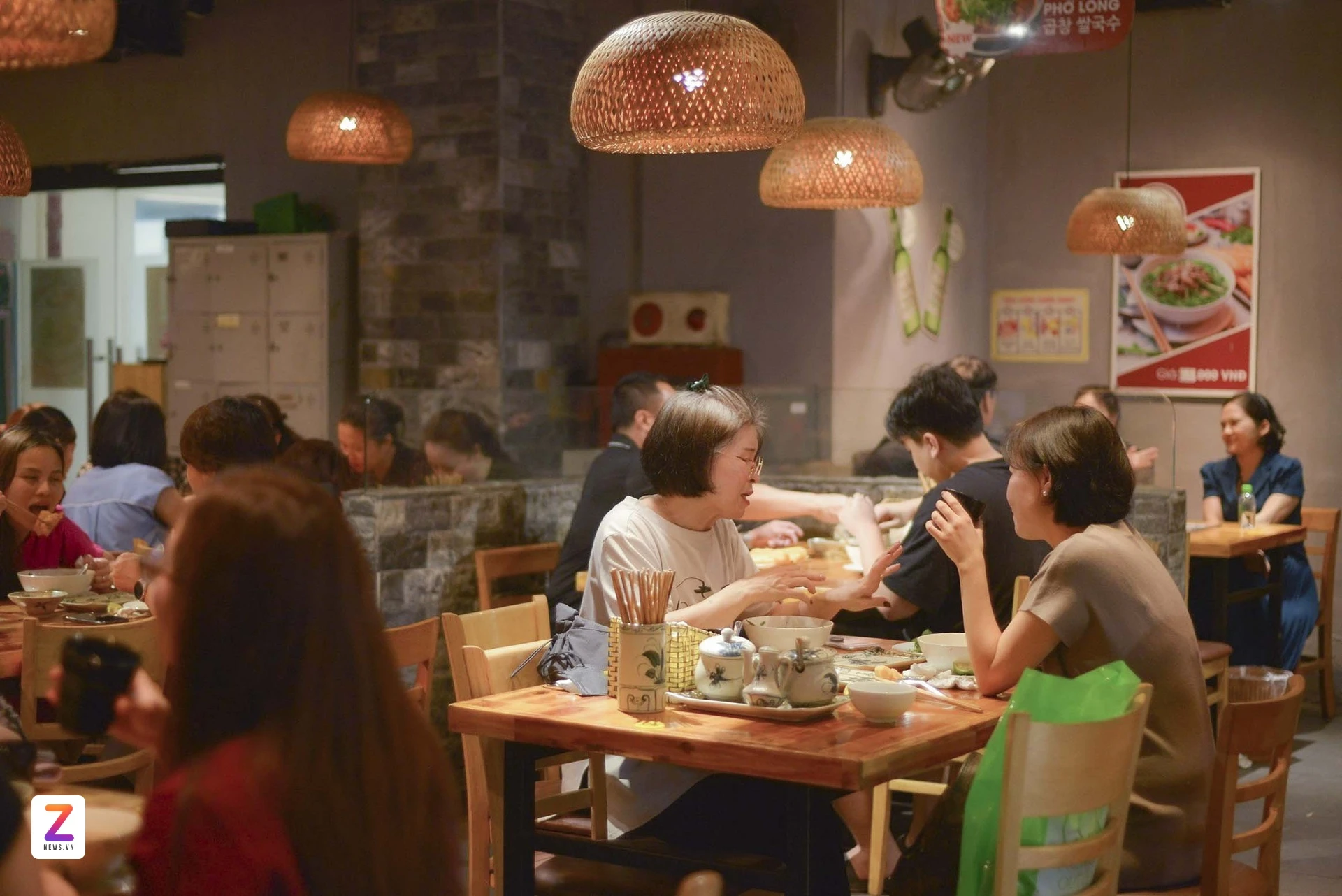
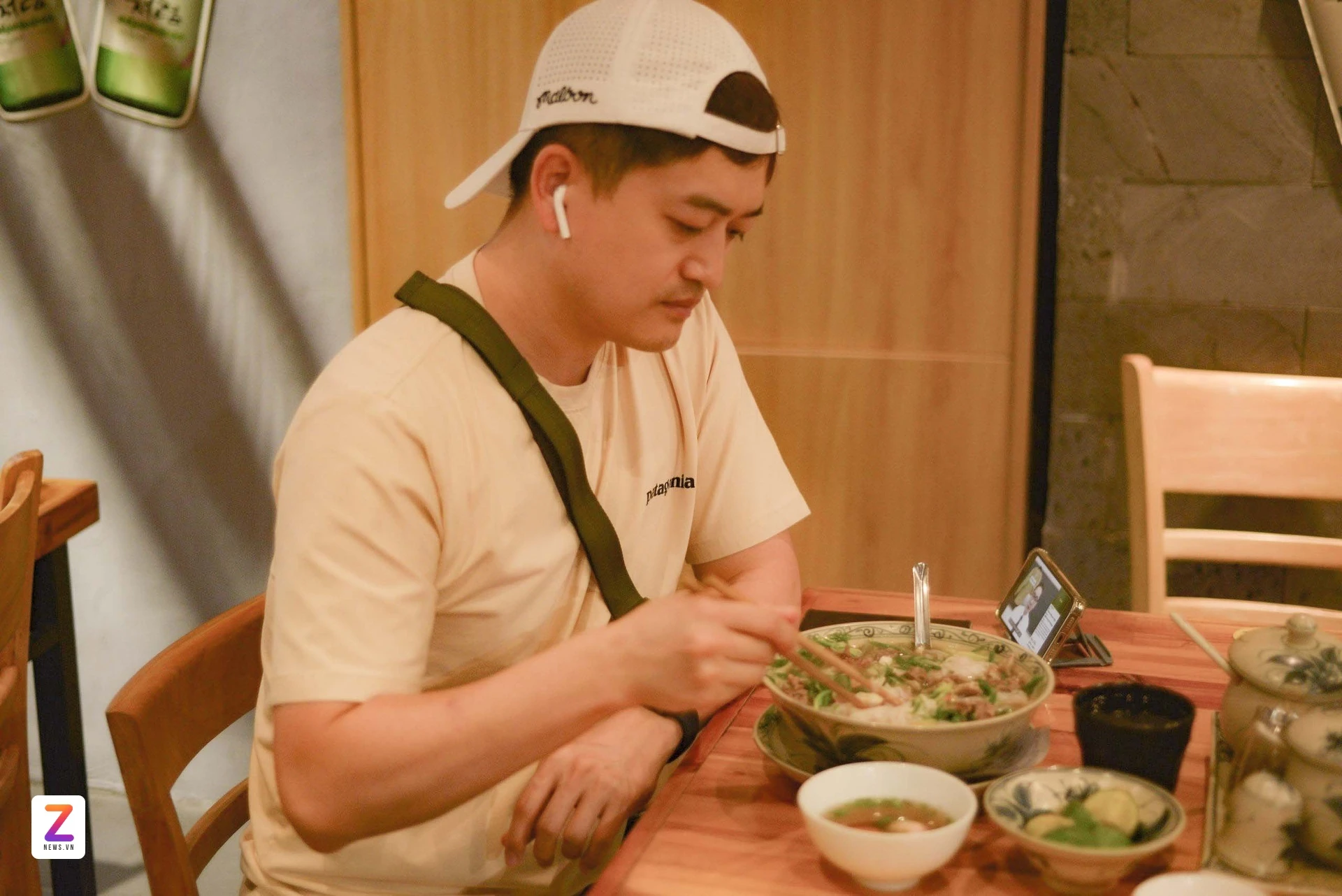
Pho Thin 13 restaurant in My Dinh, in addition to selling "Korean-style" pho, still serves traditional Vietnamese pho dishes. Yun Ha Jun (20 years old) has been coming to Vietnam since he was 10 years old and shared that he and his family love Vietnamese food. He has been to this pho restaurant many times, but has never wanted to try "Korean-style" pho.
"I don't want to add any other toppings because I'm afraid of mixing up the taste and losing the typical flavor of pho. I knew this restaurant through friends and often brought my family here. When talking about Vietnamese cuisine, it's impossible not to mention pho. The dish is always among the most famous in the world and is also famous in Korea," Ha Jun said.
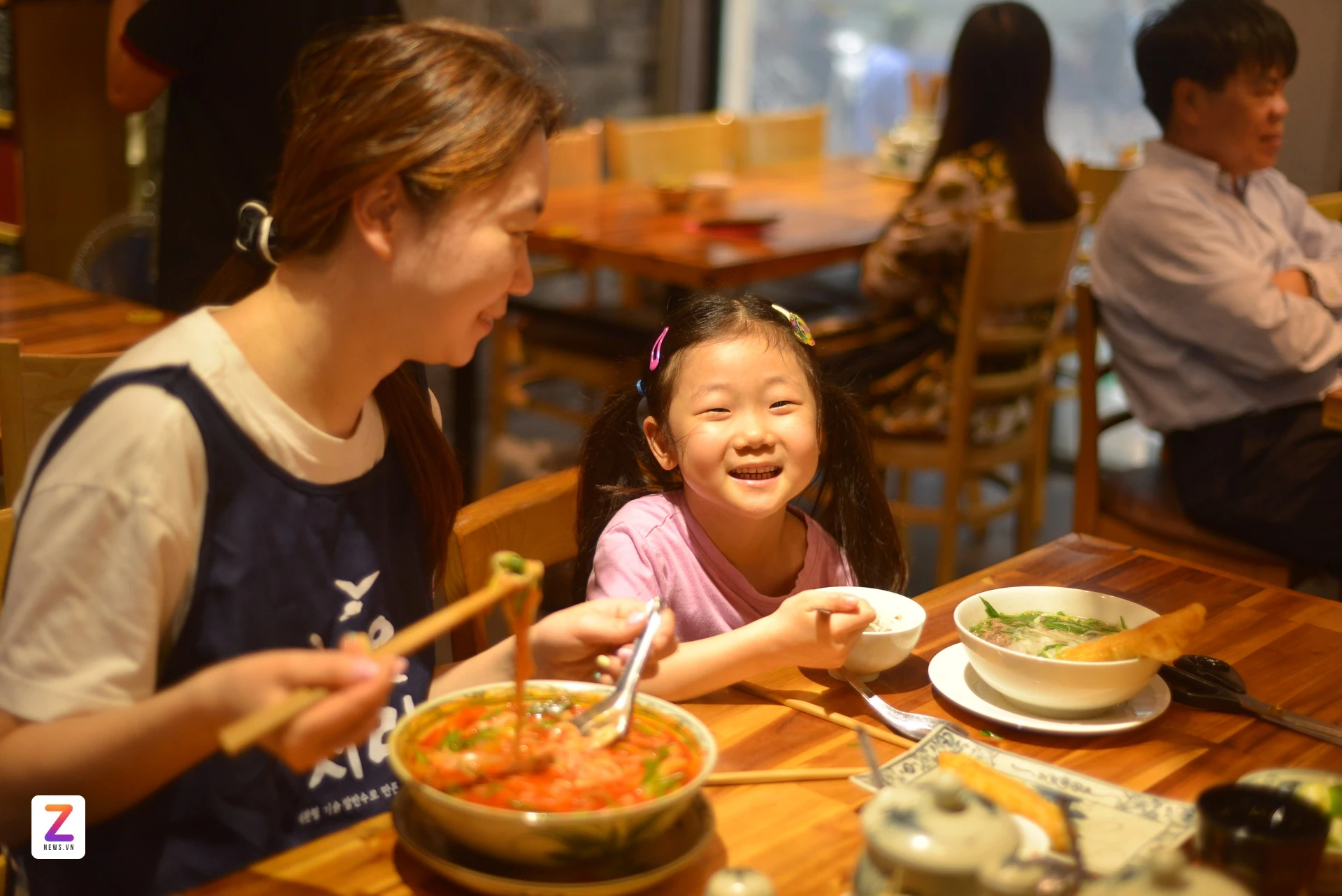
On the contrary, Haejin (34 years old) and her 6-year-old daughter, who came to Hanoi for 15 days, shared that "Korean-style" pho is very attractive, suitable for Korean people's taste.
"I know the restaurant through social networks, the food is very delicious. I like both traditional Vietnamese pho and this new type of pho. This is the perfect combination, the intersection of two culinary cultures," she said.
Sharing the same opinion, Yeongil Nam (38 years old), coming to Vietnam for the first time, said he knew about the restaurant through a friend's introduction. He thinks that "Korean-style" pho is very new and creative.
"I am very impressed with Vietnamese pho noodles, the noodles are soft, flexible, combined and the broth is a bit like Korean beef rib stew soup. This helps the dish both create a new feeling and bring closeness and familiarity. I feel welcome and harmonious here," Yeongil Nam said.
Usually only sold to Koreans
Having experience in the Korean culinary market, Mr. Dung, General Director of Hanoi Pho Thin Investment and Development Joint Stock Company, and shareholders in the company have exclusively researched and developed Korean beef tripe pho and Korean beef rib pho.
Compared to traditional pho, "Korean-style" pho accounts for 20-30% of pho restaurant sales, mainly serving Korean customers. However, the restaurant still maintains traditional Vietnamese pho dishes. The menu is designed with pictures of all the dishes, so guests can easily choose their favorite dishes.
"Korean people who come to Vietnam to travel, initially, they will experience local traditional dishes. If they suit their taste, they will definitely come back and stick with them. When they are introduced to traditional dishes, but with the taste of their homeland, they will feel like trying it," Mr. Dung said.
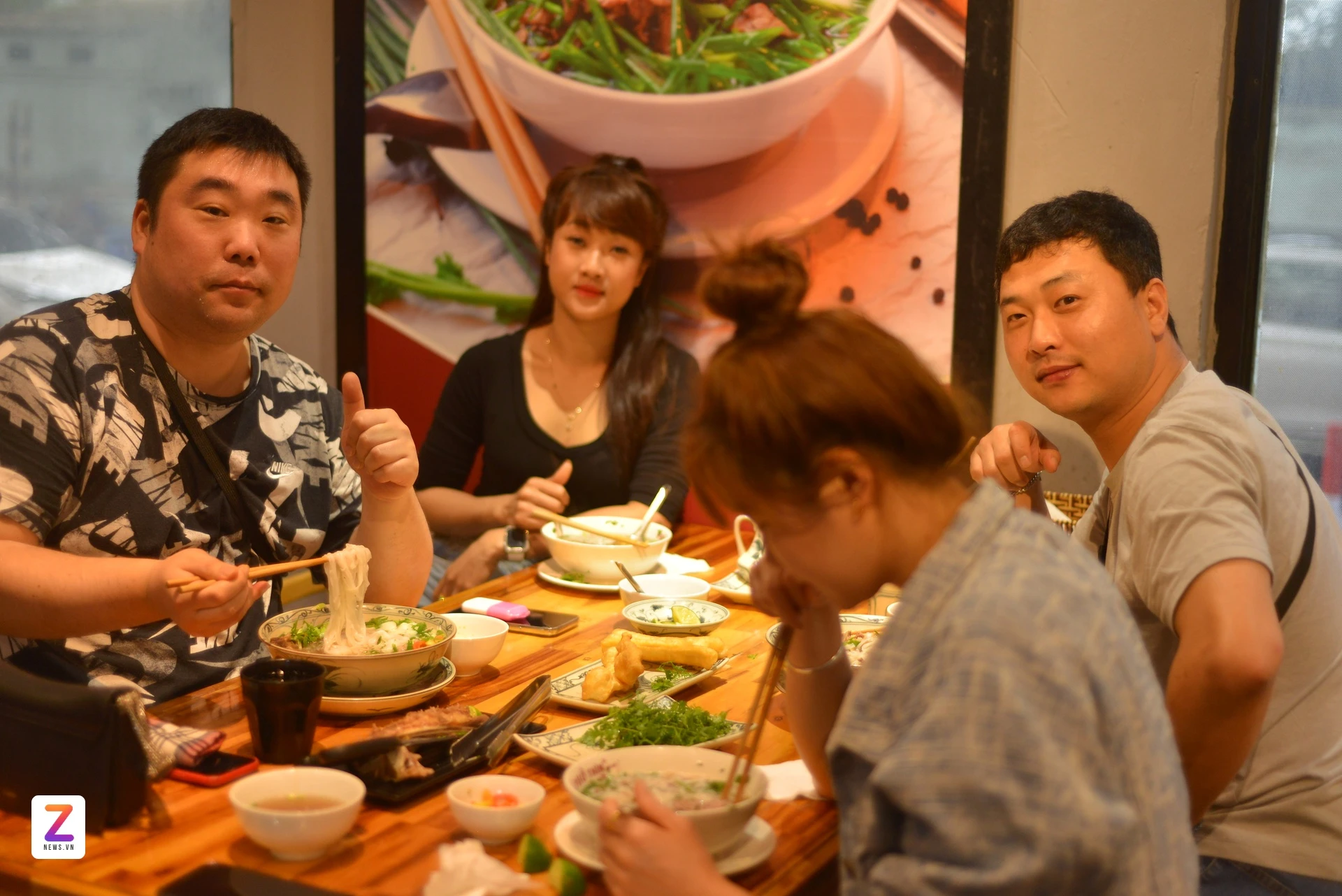
According to Mr. Dung, Korea is famous for its noodles, but does not have fresh pho. Beef tripe pho is a combination of traditional Vietnamese bone broth and some typical spices of the land of kimchi. In addition to opening for sale in My Dinh, the restaurant also expanded in areas with many Korean communities such as Bac Ninh, Bac Giang, Thai Nguyen, Da Nang... Currently, the company owns 13 Pho Thin establishments in Hanoi.
"This is an exclusive dish of our pho system, with typical spices imported from Korea. My Dinh is an area where many Koreans stay, so we decided to create a dish suitable for Korean people in Hanoi. After opening for sale, we are very happy to be welcomed and known by many people. I hope, this dish will bring a new experience to Vietnamese diners," said Mr. Dung.
Mr. Le Chi Dung, said that he initially bought the franchise from Mr. Nguyen Trong Thin (owner of Pho Thin restaurant 13 Lo Duc) from June 2019.
"After completing the transfer fee, I researched and discovered that Mr. Thin does not own the Pho Thin brand or brand. In addition to the traditional dish of re-roll, we have developed other pho dishes to serve a variety of customers," Mr. Dung said.
NoodleSaigon20 - The First Fresh Bun & Pho Noodles in Korea
At NoodleSaigon20, we firmly believe that selecting the right variety of rice is essential to crafting authentic and delicious bowls of bun and pho. We use carefully selected rice grains to produce fresh noodles that meet the highest quality standards, ensuring an exceptional culinary experience for our customers.
-
01. Traditional flavor, exceptional quality
-
02. International standard HACCP-certified factory (Hazard Analysis and Critical Control Points)
-
03. Advanced freezing technology for optimal preservation
-
04. Convenient and easier to prepare than dried noodles
-
05. Loved by international diners, exported to Korea, Japan, and beyond…
Our products are currently available for wholesale and retail in South Korea. You can order via Hotline or message us on Facebook: