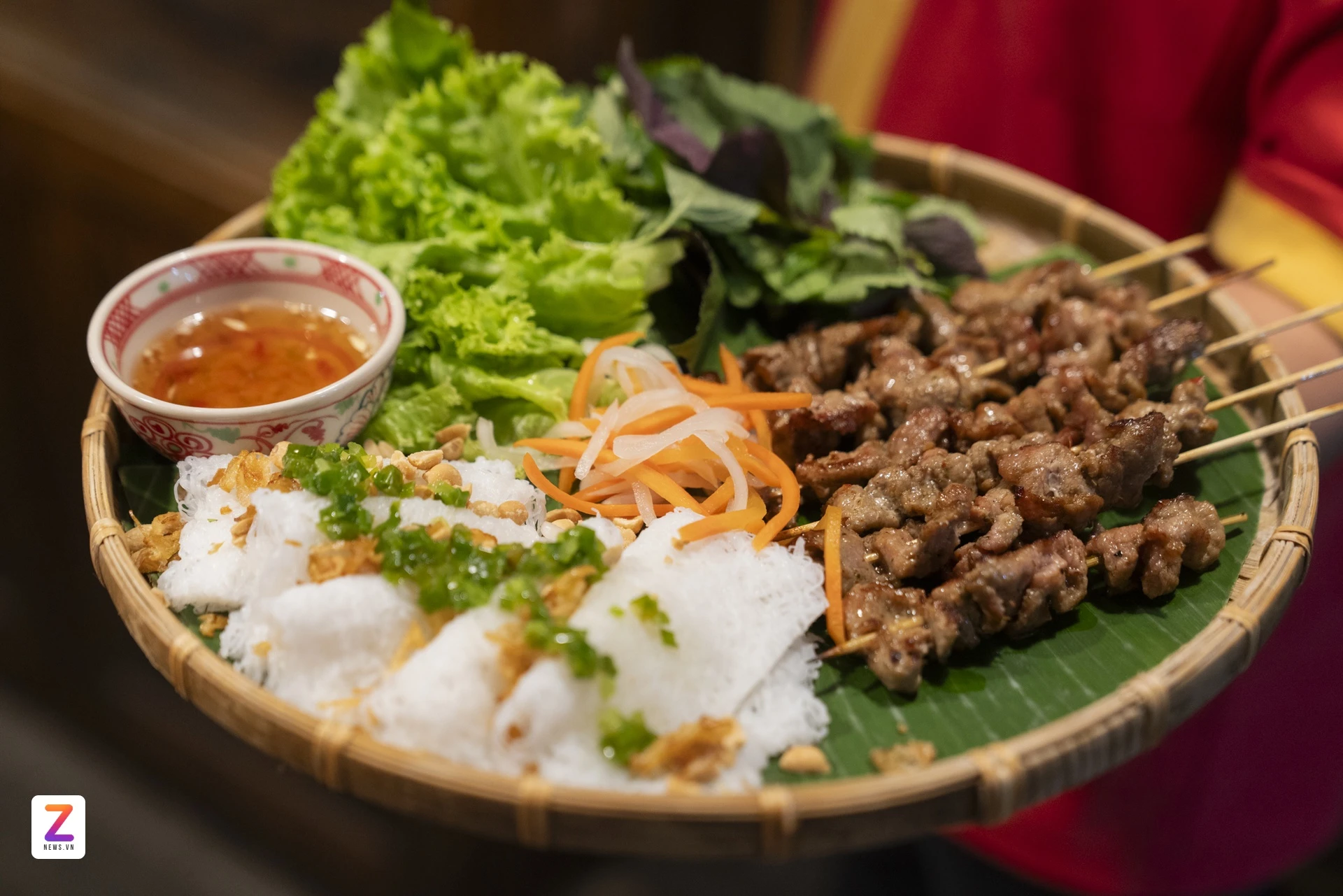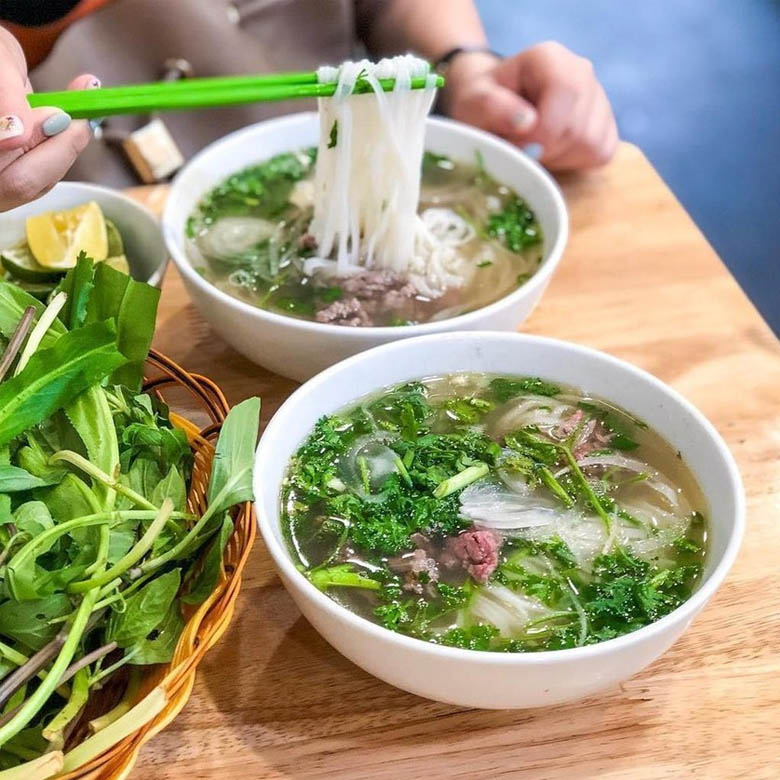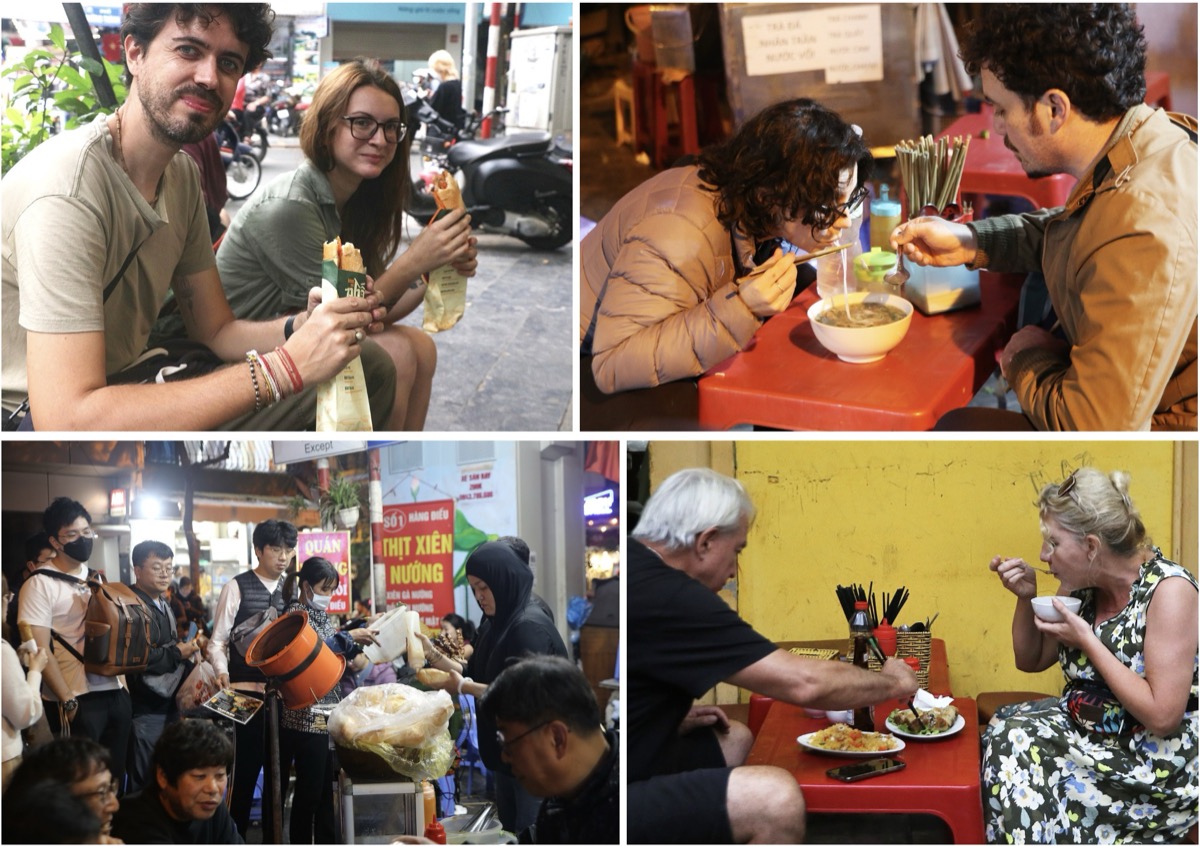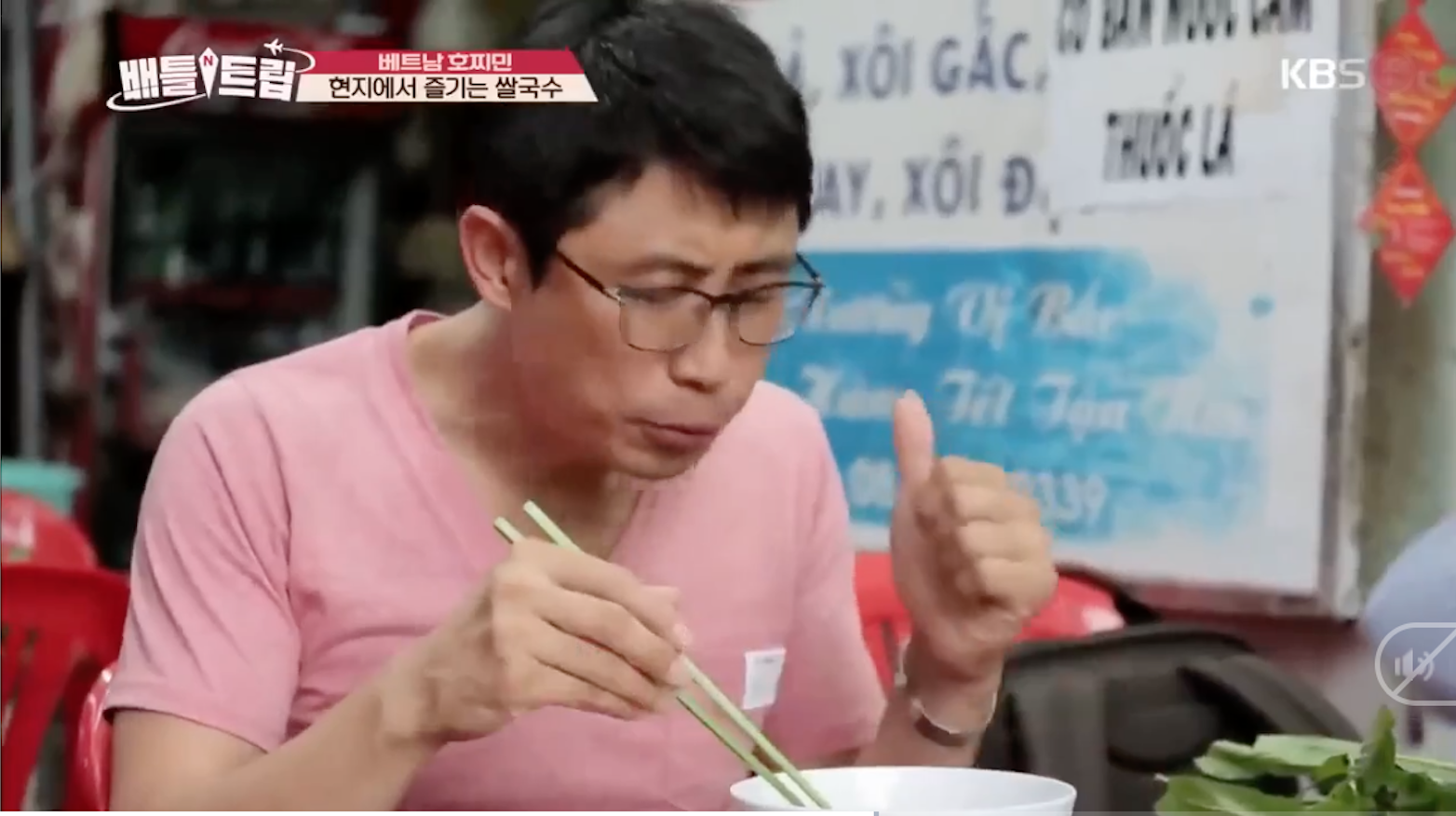
Kimchi and bibimbap are familiar around the world through the wave of Korean movies; Thai street food also fascinates international audiences through film series.

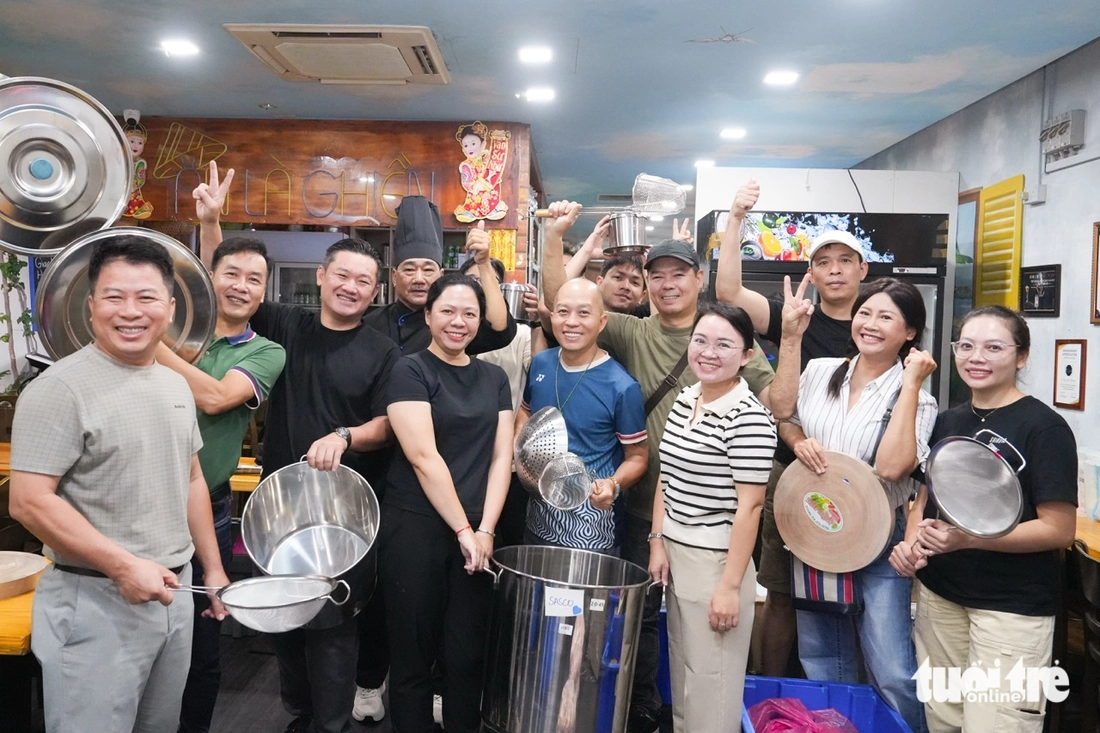
"How can iconic Vietnamese dishes such as pho, banh mi, broken rice, Hue beef noodle soup, rice paper... also touch the hearts of billions of people?", journalist Cat Khue (Tuoi Tre newspaper) asked advertising, culture, film and media experts at the talk show Promoting Vietnamese Cuisine to the World taking place on the evening of December 13 within the framework of Pho Day 2025.
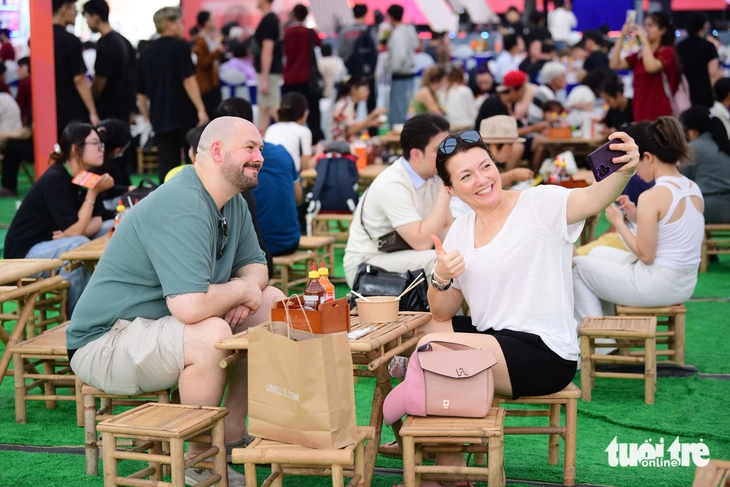
The event initiated by Tuoi Tre newspaper has entered its 9th year, taking place on December 13 and 14 at the Tax Trade Center area (old), 135 Nguyen Hue, Ho Chi Minh City.
"Stories that integrate dishes such as fish sauce, pho, bread, milk coffee... if told skillfully, will spread much more effectively than pure blatant advertising."
Mr. La Quoc Khanh
Today I eat pho, tomorrow I eat broken rice, tomorrow another dish, how do I remember?
Mr. Nguyen Thanh Dao - Chairman of Ho Chi Minh City Advertising Association, said that Vietnamese cuisine is currently promoted through many different channels such as official channels (foreign affairs activities, high-level events...); digital media platforms such as websites, electronic newspapers, review sites and international KOLs; Vietnamese restaurant chain system globally; tourists; or exporting food... However, Vietnamese cuisine can still be promoted more widely.
Mr. La Quoc Khanh - Permanent Vice President, General Secretary of the Vietnam Culinary Culture Association, said that cinema is one of the media with the most powerful spread thanks to its global nature. He hopes filmmakers can convey the depth of Vietnamese culture and culinary philosophy like yin and yang and the five elements through cinema.
Director, producer, and actress Thu Trang loves Korean movies. When watching, even though it was a romantic movie, she remembered kimchi and black bean paste in her mind and positioned it as Korean cuisine, because the characters in the movie eat that dish day after day, movie after movie.
"In Vietnam, we lack a clear strategy. Many Vietnamese films are not consistent in terms of food. Today this film lets the characters eat pho, tomorrow another film lets the characters eat broken rice, and another film has new dishes, so international audiences don't remember anything about Vietnamese cuisine on screen," she said.
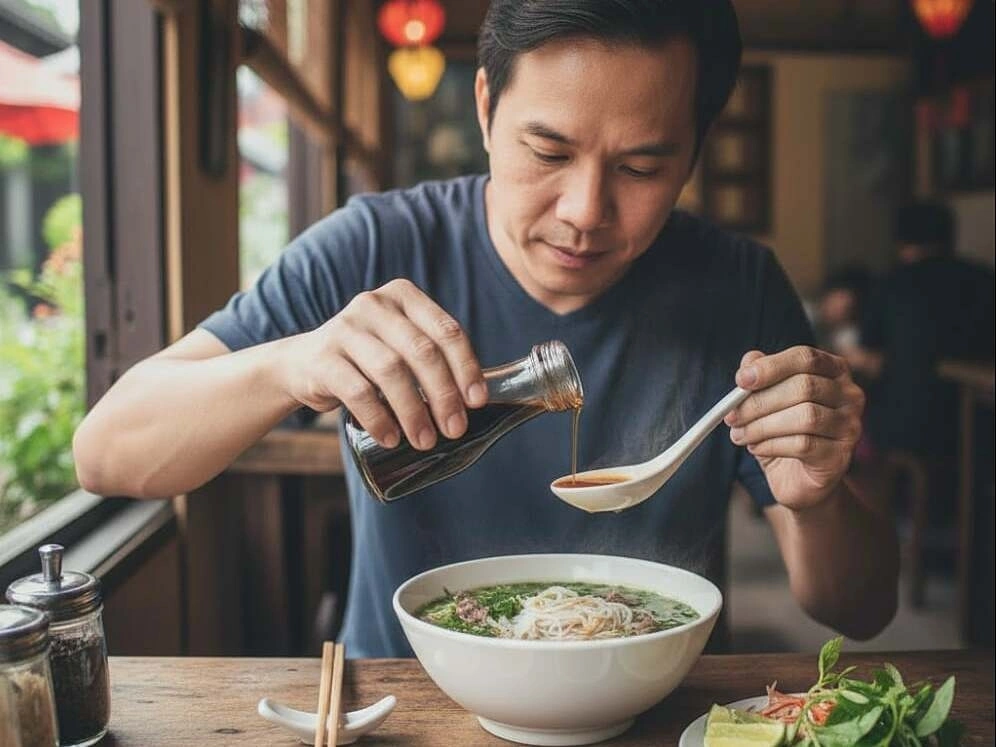
Thu Trang "for example, pho, if every movie has images of pho, pho will be imprinted in the minds of international audiences".
Having the same thought, director Trinh Dinh Le Minh said that when watching Korean dramas, the scenes of the whole family gathering to eat kimchi and grilled meat are imprinted in the audience's minds "also demonstrating the soft power of the nation".

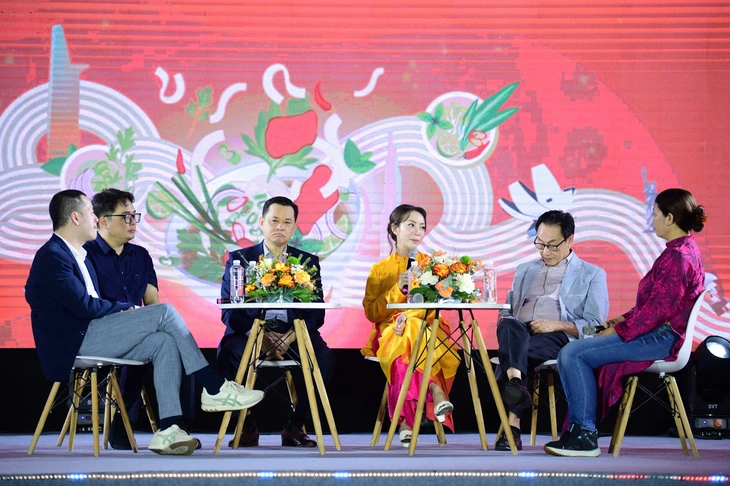
According to director Trinh Dinh Le Minh, cinema has the ability to preserve profound memories, thereby effectively influencing domestic and international audiences. In particular, television series with high broadcast frequency have a faster and wider spread than movies.
Director Phan Dang Di pointed out that the spirit of Vietnamese cuisine is intersectionality and tolerance.
According to him, cuisine is one of the factors that most clearly shows Vietnamese identity. It's not just about the food, but also about the vitality in the cuisine of a nation that has overcome many difficulties and challenges in history.
"We must focus on presenting Vietnamese cuisine clearly, highlighting its superior values and characteristics, instead of displaying it sporadically," Phan Dang Di shared.
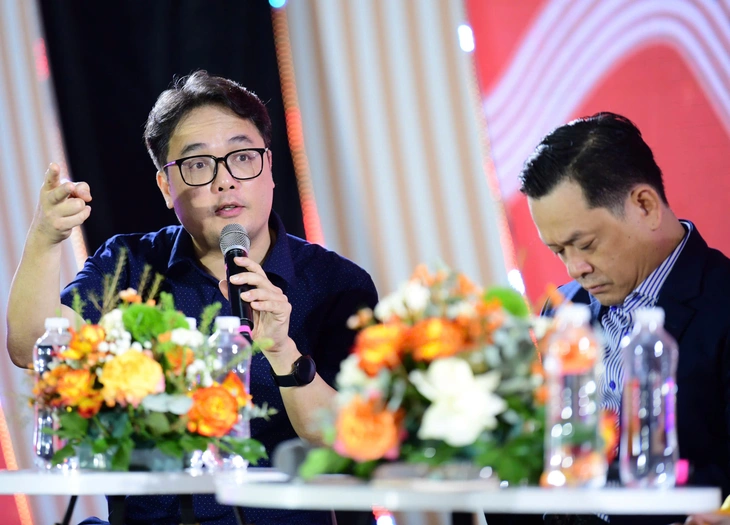
Take family meals as a connecting point in the movie - Photo: QUANG DINH
Must be a national project
In Korea, kimchi is widely known partly through movies. Phan Dang Di emphasized that Korea can do it because they see the promotion of cuisine and culture as a national story, not just the responsibility of filmmakers or a few individuals who simply love food.
"It is necessary to determine that this is a national project, with a clear theme and appropriate budget," he said. Can cooperate with global platforms such as Netflix or major international channels to promote if necessary, in return for benefits: "A culinary scene, even if it is not too big, can still become a destination that attracts the attention of the whole world."
Thu Trang expressed that intentionally integrating cuisine or making a film specializing in cuisine is completely commercially viable.
But "we must create a main story that has the ability to lead subtly so that the cuisine appears naturally rather than being overly advertised, only then will it remain in the hearts of viewers."

Mr. La Quoc Khanh said that Korea, Thailand, and Japan have gone ahead of Vietnam with a methodical and long-term culinary promotion strategy because they are aware of the role of culinary culture.
Once determined, the Government selects typical dishes, provides direction, and coordinates with entrepreneurs, businesses, artisans, and chefs to effectively promote them.
However, "to move quickly and effectively, it is necessary to have investment and guidance from the State and promotion agencies. If we only rely on associations and unions to self-advocate, we can still do it, but it is difficult to develop sustainably," Mr. Khanh expressed.

Currently, the association is implementing the Vietnam Cuisine Map project and digitizing data, focusing on typical dishes of each locality, ingredients, processing processes and origin stories..., so that the domestic and foreign public can easily look up when learning about Vietnamese cuisine.
According to him, joining Michelin is necessary but more important is promoting facilities outside the remaining departments. It is necessary to develop common criteria for restaurants, menus, quality, service and food uniformity.
For example, we can list 50 typical dishes as a "national menu" to welcome international guests.

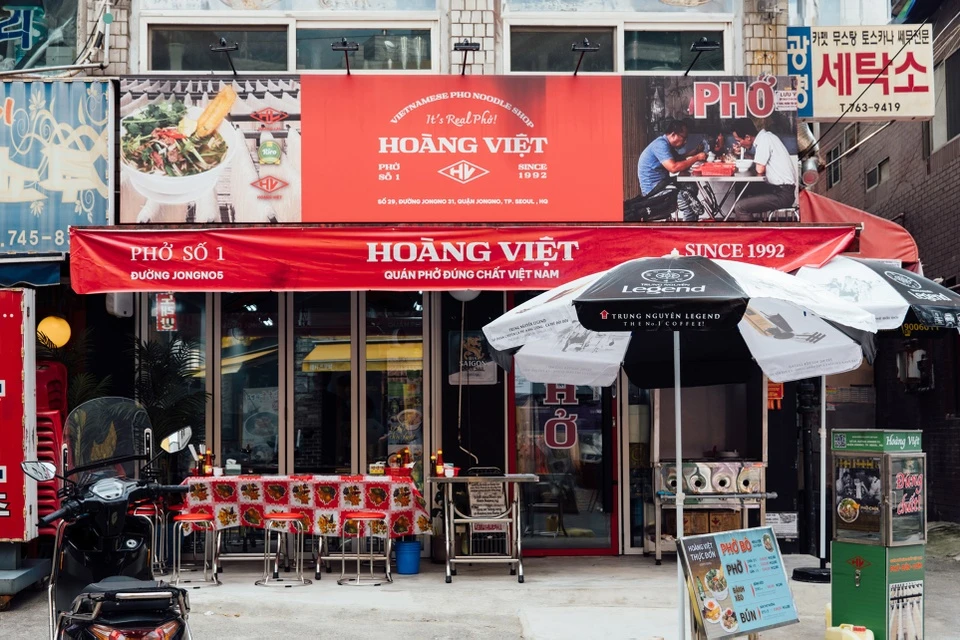
NoodleSaigon20 - The First Fresh Bun & Pho Noodles in Korea
At NoodleSaigon20, we firmly believe that selecting the right variety of rice is essential to crafting authentic and delicious bowls of bun and pho. We use carefully selected rice grains to produce fresh noodles that meet the highest quality standards, ensuring an exceptional culinary experience for our customers.
-
01. Traditional flavor, exceptional quality
-
02. International standard HACCP-certified factory (Hazard Analysis and Critical Control Points)
-
03. Advanced freezing technology for optimal preservation
-
04. Convenient and easier to prepare than dried noodles
-
05. Loved by international diners, exported to Korea, Japan, and beyond…
Our products are currently available for wholesale and retail in South Korea. You can order via Hotline or message us on Facebook: