Hanoi pho is still delicious today but has more or less changed from the way of cooking to the way of serving due to many social changes, according to pho expert Trinh Quang Dung.
Mr. Trinh Quang Dung, a 71-year-old scientist working at the Vietnam Academy of Science and Technology, in 2022 launched the book "One Hundred Years of Vietnamese Pho" (Vietnamese Women's Publishing House) after decades of collecting and researching precious documents on pho from past to present.
When researching, Mr. Dung found that there are two opinions about the origin of pho: Hanoi or Nam Dinh. In the early 20th century, the "Pho army" of the Nam Dinh pho brand traveled to Hanoi to practice. Also during this time, the original pho line appeared in Di Trach, Ha Dong province (now Hanoi).
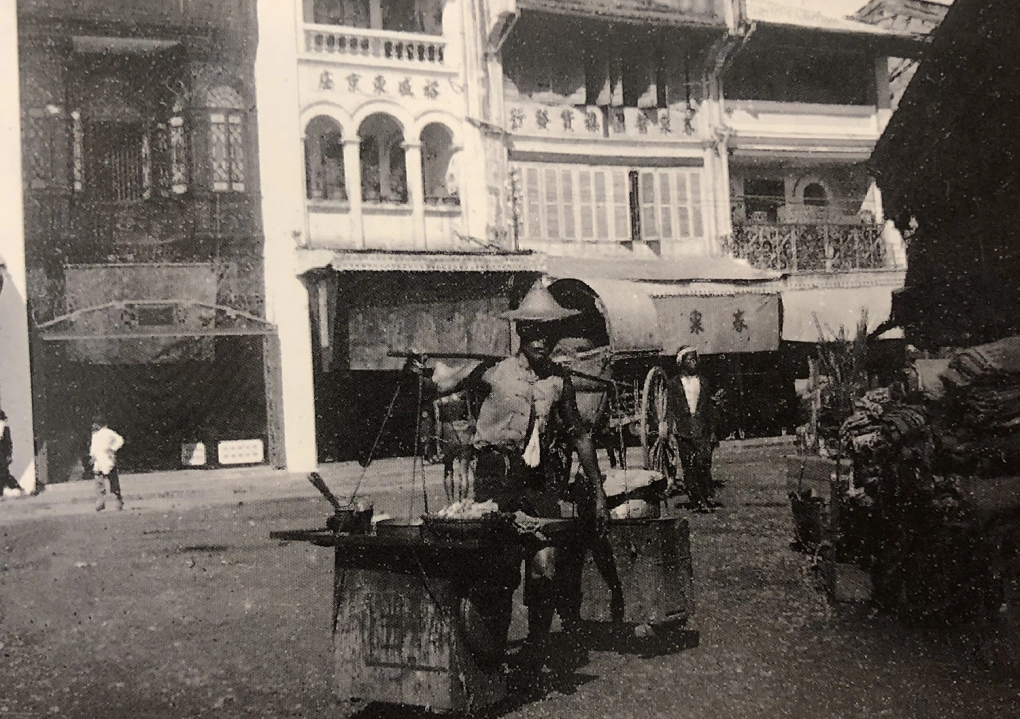
However, the researcher believes that Hanoi is the cradle for pho to develop because the market here is more abundant than Nam Dinh. Despite the large number of customers from Nam Dinh textile factory, pho is still a luxury dish for rural Vietnam, which is not in the habit of eating gifts. This is what the researcher learned after a research trip about Nam Dinh pho and a conversation with an elder in Van Cu village.
"Van Cu village has the Co family with the most people selling pho, about 75% of people who have left farmers sell pho. Gradually, other families also started making pho and Hanoi is the most prosperous place for this profession," Mr. Dung told VnExpress.
The researcher believes that there are characteristics of the old bowl of pho that the current generation finds difficult to perceive. During the war, Hanoians had to evacuate to the countryside many times. When they returned, they were more or less "ruralized", their eating habits were also more sloppy, and they could no longer maintain the elegance of the old Hanoians. Social changes through each period also directly affect the traditional bowl of pho.
Mr. Dung said the most visible point about the disappearance of traditional pho is the rustic bowl of Bat Trang pottery village or many other traditional pottery kilns. This type of bowl has a flared mouth and a knotted bottom. The surface area gradually decreases so that the pho broth is still hot until the last spoonful. The capacity of the bowl is small, not as much as current pho bowls because ancient Hanoi people considered pho as a snack to eat, not a full meal.
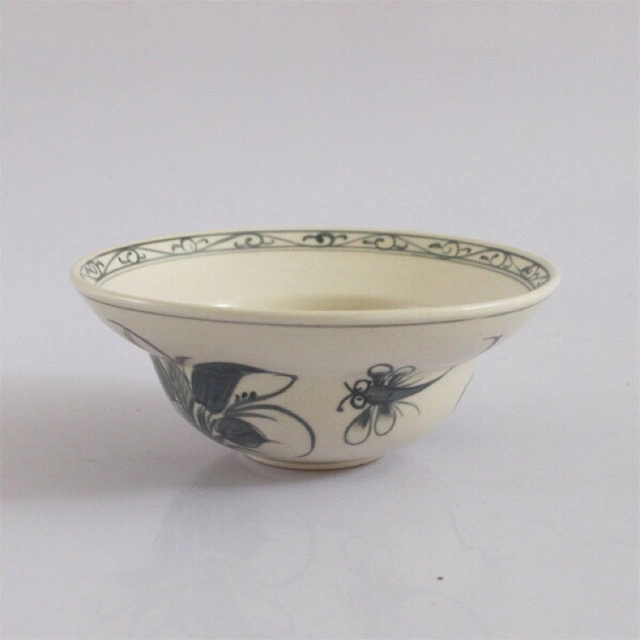
"Pho eaten instead of rice appeared later when life gradually became more boring and social upheavals destroyed many quintessential things of Hanoians," Mr. Dung said.
According to the researcher, ancient Hanoi people had a very sophisticated taste of pho. When going to the pho restaurant, many people bring lime wedges from home because they believe it will taste better than the lemons at the store. In the book "One Hundred Years of Vietnamese Pho", author Trinh Quang Dung wrote that Hanoi connoisseurs of pho must definitely enjoy the restaurant's bowl of blood pudding. The blood here is not cow blood but stewed beef bone broth and marrow secretions, "very sweet and greasy".
Mr. Dung said that in the past, pho noodles had to be large, about the size of a man's little finger. Large banh mi can hold more pho broth, so just by tasting the noodles, you can clearly feel the sweetness from the broth. When eating, people pick up pho noodles, thinly slice meat, and add a little water to the spoon. Just like that, eat each small bite, gently and peacefully.
Mr. Dung said good pho must be hot pho. Therefore, the temperature of the air conditioner makes the pho taste less delicious. When researching old documents, the scholar said that the late writer Nguyen Tuan had repeatedly affirmed this.
"The hotter the pho, the tastier it is because it is not haunted by the taste of beef fat," Mr. Dung said.
One of the "quintessence" of Hanoi pho that has now disappeared is the pho stalls. Pho restaurants never prepare two bowls at a time. When customers order, they start loading the cakes and slicing meat, unlike now, where pre-sliced meat is "very industrial". Pho is always hot and "extremely refreshing" to eat, he said.
What Mr. Dung doesn't like are the so-called "high-end" versions of pho, which use imported beef and a series of luxury ingredients, making each bowl cost millions of dong. According to him, it cannot be called pho but is more like "selling meat" and "selling mushrooms". In his book, Mr. Trinh Quang Dung also mentioned the space to enjoy pho. According to the author, you should eat pho in a popular space, instead of "fancy, 5-star, 6-star".
"If you want good pho, you also need a context. You have to eat pho right at the restaurant, if the restaurant is dirty it's best," the author quotes journalist Pham Chu in an article in Chinh Luan (a newspaper in Saigon before 1975). However, Mr. Dung also added that this was probably only true in ancient times. Nowadays, if one writes like that, the author will be "stoned".
However, Mr. Dung said that in reality, pho lovers in Hanoi do not pay much attention to the form and presentation of the restaurant but pay more attention to the quality of pho. Old shops like Thin Bo Ho and Tu Lun, even though they don't have "high houses, wide doors, bright tables and chairs", still attract customers. In particular, Nam Dinh pho restaurants in Hanoi and many other places often have a rustic, sometimes sloppy style. Mr. Dung confirmed this when talking with Mr. Co Nhu Hung, former chairman of the Thanh Nam pho restaurant owners' association. Meanwhile, the "air-conditioned pho" movement was imported from Ho Chi Minh City, but is less welcomed in Hanoi.
Mr. Dung also said that one of the factors that makes traditional pho no longer the same is MSG and sugar used to create sweetness. This is a characteristic of pho during the subsidy period when the economy was difficult and people had to tighten their belts.
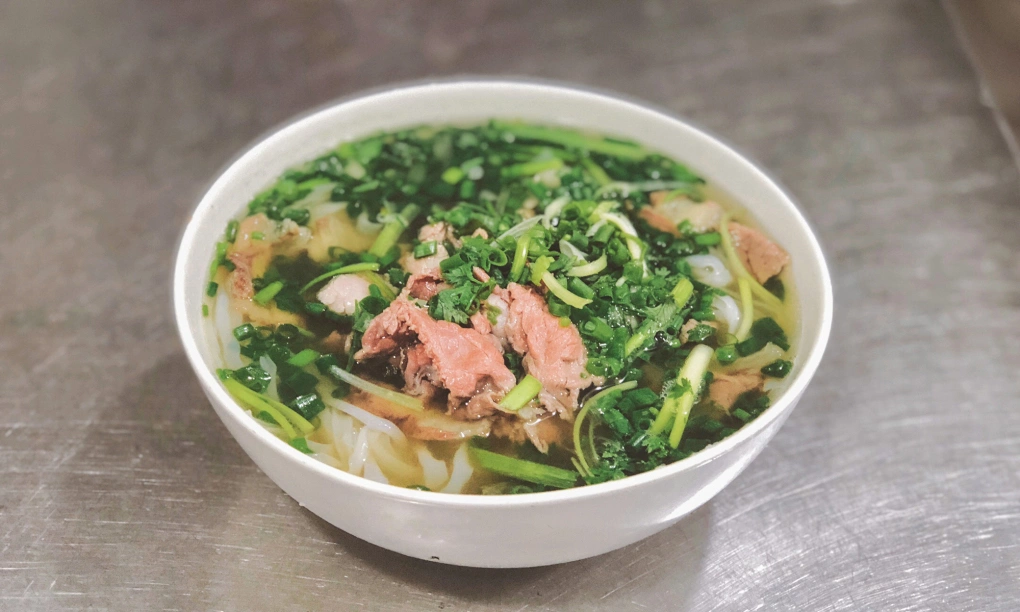
"It's so lacking, where can I get meat and bones? So, when cooking pho, the only way is to ask for the savior of MSG noodles," Mr. Trinh Quang Dung wrote in his book about pho.
However, at that time, MSG was also very precious, it was not something you wanted to have. In 1979, a bowl of pho usually cost a few hundred VND, but a special bowl with MSG noodles cost up to 1,000 VND. This is understandable because during the subsidy period, Hanoi once had a type of "unmanned pho", meaning pho without meat, just boiling water and MSG, served with pho noodles.
The subsidy period greatly influenced the pho eating style of ancient Hanoi people. According to scholars, besides MSG, this period of shortage has created "transformations" such as cold rice mixed with pho, pho with bread - Mr. Dung calls this "padded pho". This style of pho is popular because people are always hungry. Therefore, it is still a "great dish" compared to "fist" cakes and "cellar lid" cakes - cakes made from wheat flour, rolled like a fist or flattened like a casserole lid. This style of eating has gradually disappeared, but there is still a version that is still "preserved and promoted", which is pho with fried fish.
"Pho connoisseurs never accept the hustle and bustle of eating that takes away the noble taste of the royal dish they always worship," Mr. Trinh Quang Dung commented in the book "One Hundred Years of Vietnamese Pho".
According to Mr. Dung, the subsidized pho trade is an indicator of the "ruralization" of former Hanoians after being evacuated to the countryside to avoid American bombs. When eating commercial pho, customers must serve themselves and line up to get a bowl. Store staff don't care much about customers. At that time, commercial pho shops did not have napkins - something considered a luxury item of the "petty bourgeoisie". Many customers, after eating, pick up their chopsticks and wipe their mouths horizontally like when eating a feast in the countryside.
Mr. Dung said he will not eat at traditional restaurants that force customers to line up and serve themselves, no matter how delicious the pho is. People in ancient Hanoi had a peaceful way of eating and drinking, there was no need to line up to eat. However, he also emphasized that this is each person's preference, so he does not judge.
Society has changed and old Hanoians like Mr. Dung are gradually disappearing. The traditional bowl of pho and the elegant way of eating in the past are "a beautiful past that young people, even if they hear about it, can hardly understand," he said.
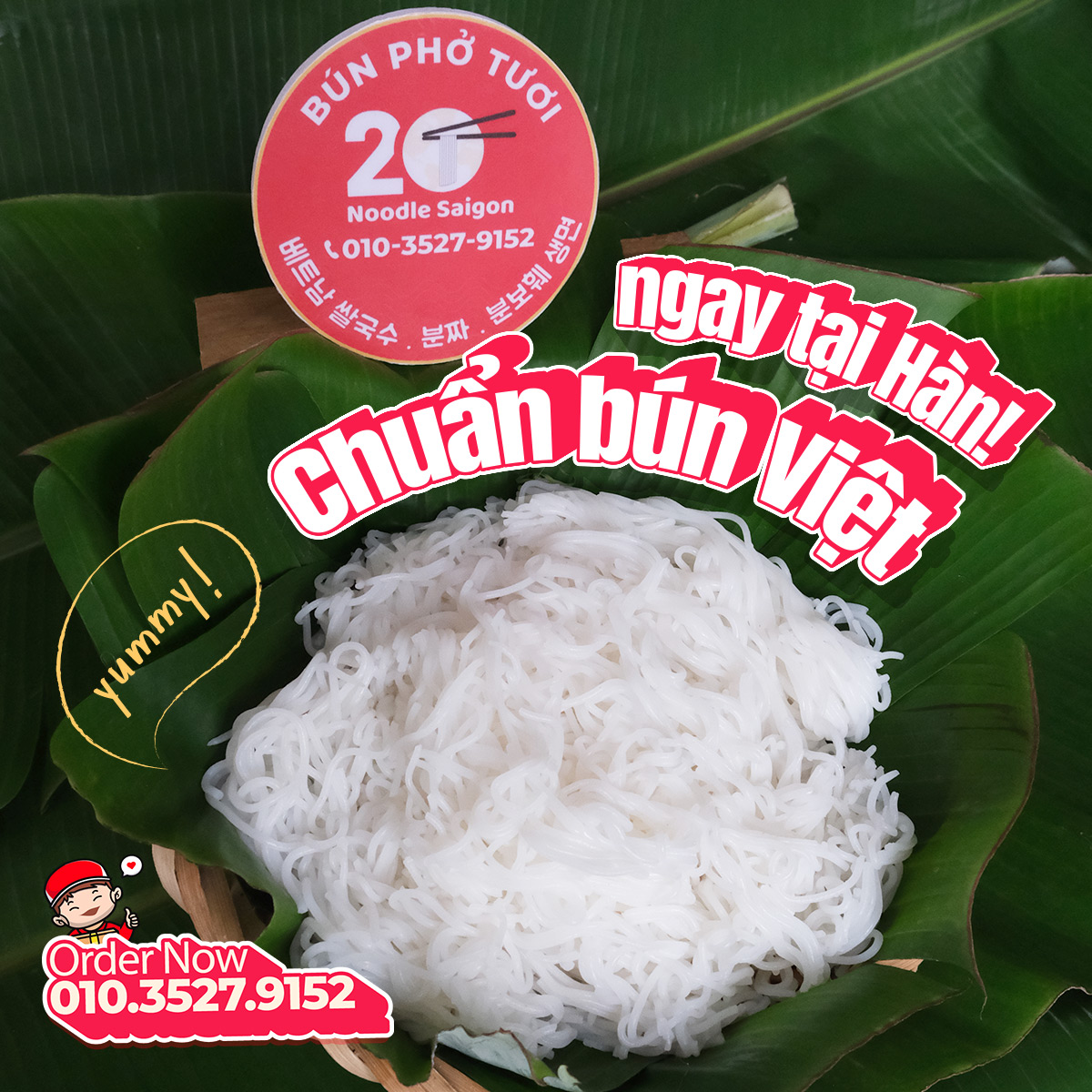
NoodleSaigon20 - The First Fresh Bun & Pho Noodles in Korea
At NoodleSaigon20, we firmly believe that selecting the right variety of rice is essential to crafting authentic and delicious bowls of bun and pho. We use carefully selected rice grains to produce fresh noodles that meet the highest quality standards, ensuring an exceptional culinary experience for our customers.
-
01. Traditional flavor, exceptional quality
-
02. International standard HACCP-certified factory (Hazard Analysis and Critical Control Points)
-
03. Advanced freezing technology for optimal preservation
-
04. Convenient and easier to prepare than dried noodles
-
05. Loved by international diners, exported to Korea, Japan, and beyond…
Our products are currently available for wholesale and retail in South Korea. You can order via Hotline or message us on Facebook: