On the morning of July 21, the image of some Koreans wearing the 'Don't give herbs' shirt spread widely online, making many people laugh, while others expressed curiosity.
On July 21, social networks were abuzz with images of three Korean tourists visiting a bakery in Da Nang wearing somewhat unique outfits. They wear T-shirts printed with Vietnamese words like "Don't add coriander" or "Add coriander."
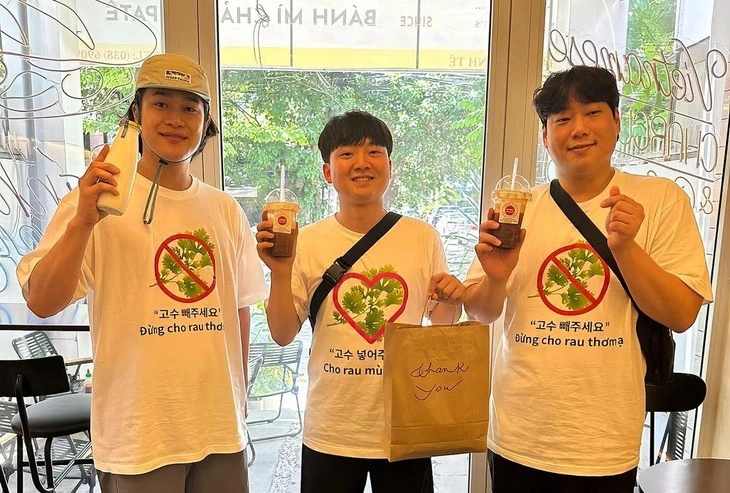
The photo was shared by Instagram account @grandmavuongs, with a humorous caption: "It must be said... they let Mrs. Vuong know very clearly who is in the coriander team and who is in the non-coriander team."
This lovely story quickly received many sympathetic comments from the online community. Many Vietnamese people also admit that they... cannot eat coriander (also known as coriander), even though it is an indispensable ingredient in dishes such as bread, Vietnamese pho, vermicelli noodles or banh cuon.
But why do Koreans have such a strong reaction to this type of vegetable sandwiched in bread?
According to Naver (Korea), the phrase "No coriander, please" has become a familiar catchphrase for many Korean diners when going to Southeast Asian restaurants. The reason is because they cannot stand the characteristic taste of coriander, even describing it as the smell of... soap or detergent.
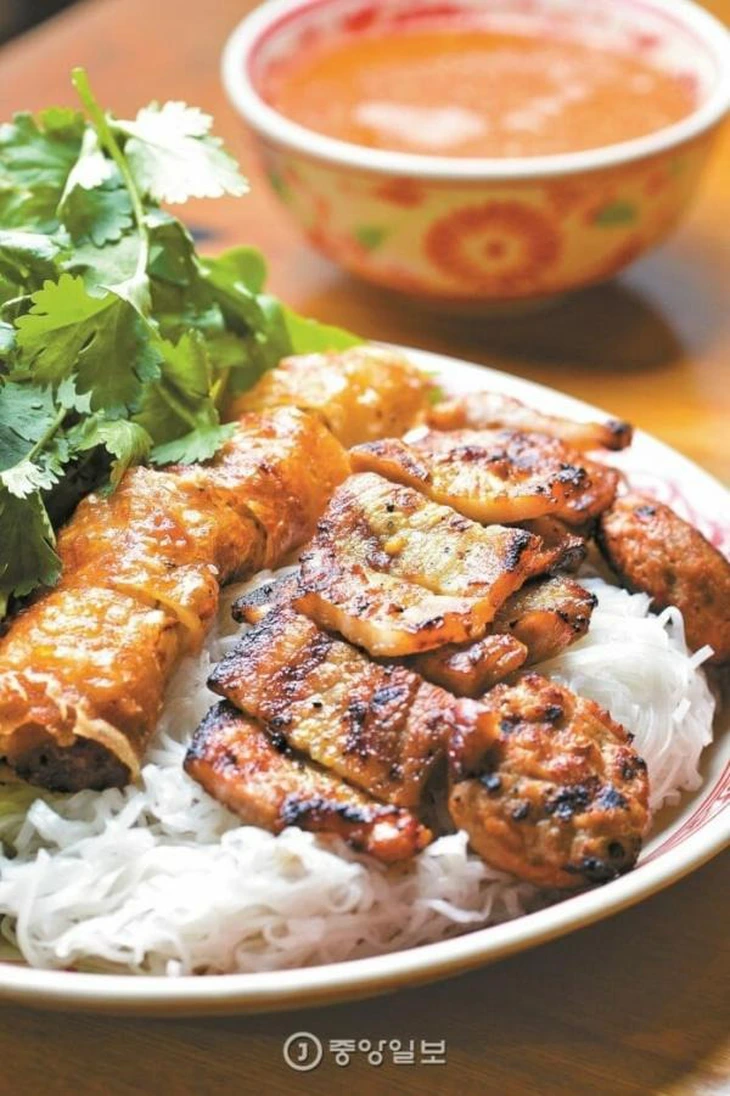
Coriander, also known as coriander, is an indispensable ingredient in a "Made in Vietnam" sandwich.
This feeling is not simply a matter of taste, but may originate from genetic factors.
A 2012 study in the UK showed that people who find coriander to have an unpleasant odor often carry a gene mutation in the olfactory receptor called OR6A2. This gene helps detect the smell of aldehyde - a compound present in both coriander and... some soaps or dishwashing liquids.
Notably, the rate of Koreans carrying the OR6A2 gene mutation is higher than in many other countries. That may also be the explanation why most Koreans find the smell of coriander very unpleasant or impossible to eat.
Historically, coriander has been present in the Korean peninsula since the Goryeo period (X - XIV centuries) with the name gosu or bindaepul. However, this vegetable has never really been popular in Korean people's daily meals. Only a few localities such as Ganghwa Island or the northern region of Paju (Gyeonggi Province) have the habit of using coriander more often.
Therefore, even though it has been present for hundreds of years, coriander is still considered a "stranger" to Koreans. When traveling to Southeast Asian countries - where coriander is almost the "soul" of many dishes, many Koreans feel confused, some are even haunted by this taste.
However, like durian or shrimp paste in Vietnam, the love-hate relationship with coriander depends on each person. In the above-mentioned viral photo, there is still a Korean tourist wearing a heart-printed shirt holding a branch of coriander, as a declaration of love for this controversial vegetable.
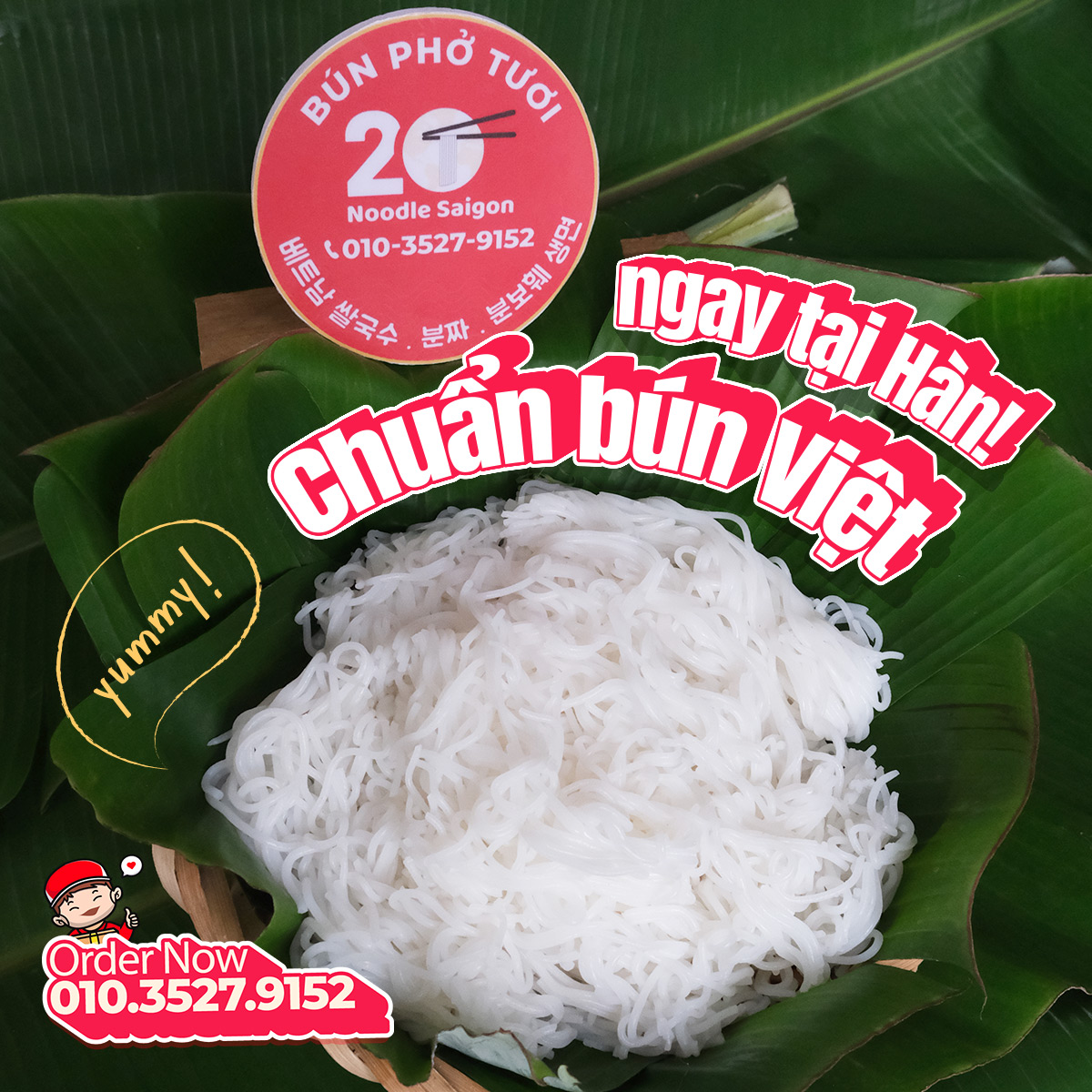
NoodleSaigon20 - The First Fresh Bun & Pho Noodles in Korea
At NoodleSaigon20, we firmly believe that selecting the right variety of rice is essential to crafting authentic and delicious bowls of bun and pho. We use carefully selected rice grains to produce fresh noodles that meet the highest quality standards, ensuring an exceptional culinary experience for our customers.
-
01. Traditional flavor, exceptional quality
-
02. International standard HACCP-certified factory (Hazard Analysis and Critical Control Points)
-
03. Advanced freezing technology for optimal preservation
-
04. Convenient and easier to prepare than dried noodles
-
05. Loved by international diners, exported to Korea, Japan, and beyond…
Our products are currently available for wholesale and retail in South Korea. You can order via Hotline or message us on Facebook: