Greater Tokyo has countless interesting things worth experiencing. One of the most special things is standing in line in the morning to eat rare beef pho rolled with two eggs and filled with onions.
If Italy has pasta, Spain has paella, Japan has ramen, then pho is definitely the "national soul" of Vietnamese cuisine. No matter what age you are or where you live, I believe that as a Vietnamese, few people say "I don't eat pho for a long time", but that "long time" lasts more than a week.
Pho - the quintessence of Vietnamese cuisine

Thin Lo Duc pho shop in Tokyo - Photo: NICK M
Vietnamese people can eat pho at any time of the day. In the morning, a bowl of undercooked pho with two eggs is enough to fill you up until noon. For lunch, eat fatty chicken pho with lots of onions. In the evening, there is a delicious stir-fried pho dish served with pickled pickles. At night, after a "hard-core" session at the pub, people crave "something watery" and before returning home to sleep, they have to stop by the night pho restaurant, order a bowl of pho with wine sauce and a few cakes, but when they look at the crispy fried pieces, they can't resist.
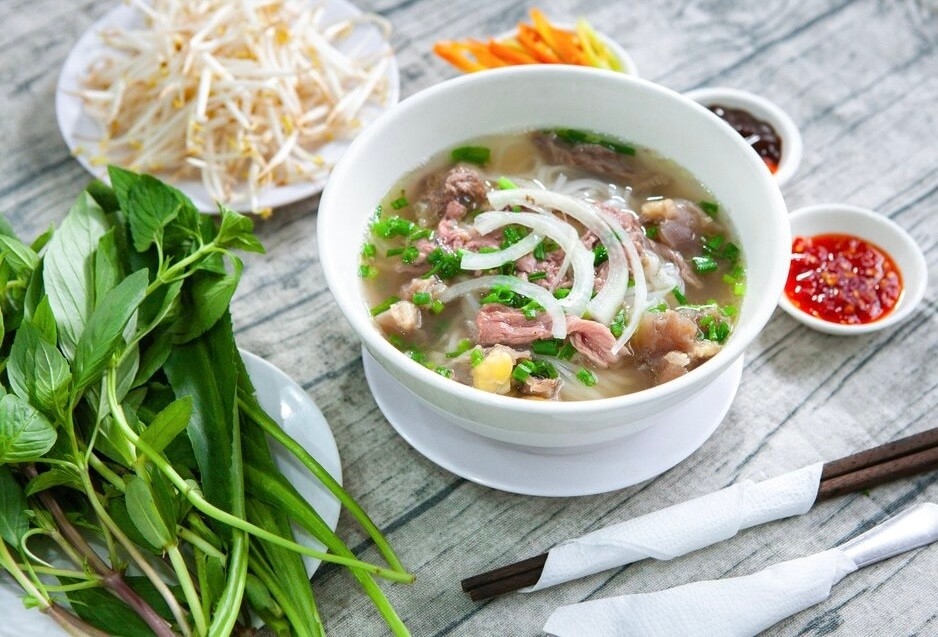
How can simply pho noodles, thinly sliced beef or chicken, and scallions become such a culinary quintessence? The most complex and "quintessential" thing about pho is the broth.
Beef bones are simmered with spices such as cinnamon, anise, grilled ginger, cardamom, sea worms, cloves, coriander seeds... and countless other ingredients that each place has its own recipe, and the flavor is not the same.
Once you have the "soul of pho", no matter where you go around the world, if you haven't eaten pho for more than a week, you will always crave it, or at least think about it and visualize the flavor clearly on the tip of your tongue.
I queued for pho in Tokyo

Queuing to eat pho in Vietnam, especially in the North, is not uncommon. I still remember when I was a child, there were weekends when my parents took me to Bat Dan street to eat beef pho and had to stand in line on the sidewalk to get a number.
But queuing to eat pho in a foreign country, in the most populous city in the world - Tokyo - is another story.
Having been to Japan for 10 years and 10 times, I consider this a second home and often jokingly say that every time I return to Tokyo it is a "homecoming". In the fall of 2019, I went on a trip with my friends and at that time, Pho Thin had just opened in this metropolis of more than 37 million people.
I accidentally discovered it when I was searching for my favorite ramen restaurant last time. And what's even more charming is that Pho Thin is located right next to this restaurant.
Queuing is a familiar culture in Japan and if you want delicious food, you have to queue for sometimes 2-3 hours. That day, we also waited about an hour in the morning to eat rare beef pho.

Pho Thin Tokyo has a narrow entrance in the basement. Customers lined up along Toshima Street near Ikebukuro train station.
This place was opened by a Japanese man, Kenji Sumi, with the advice of the owner of Pho Thin Lo Duc restaurant in Hanoi - Mr. Nguyen Trong Thin. Therefore, Tokyo Thin pho has the typical flavor of Northern pho.
The space in the basement where diners sit and enjoy pho is very neat with wooden tables and Vietnamese music playing. Pho is dry, so of course, compared to Vietnam, the standard of the cake is only 2/3.
However, in terms of beef quality, I rate it 3-4 times higher. The meat is soft, sweet and succulent.
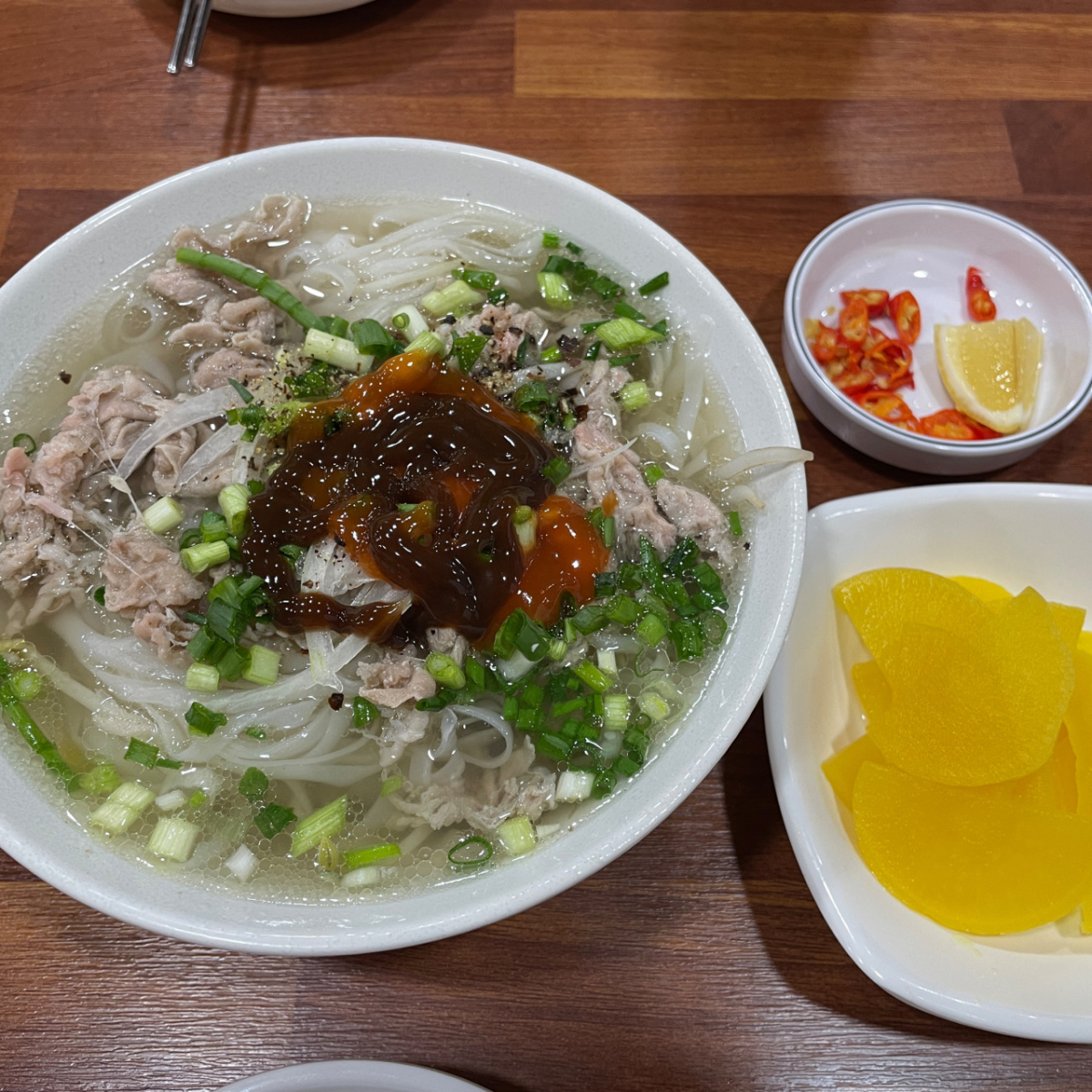
Thin Lo Duc's signature rare beef pho dish is also filled with spring onions. The restaurant in Tokyo is exactly like that. The broth is rich and has a complex flavor with many ingredients, served with chili sauce, vinegar, pepper, and chili like in Vietnam.
In the most crowded and expensive city in the world, the price of a bowl of pho is of course three times higher than sitting on the sidewalk in Vietnam.
A bowl of Tokyo Thin pho costs the same as the cheapest ramen noodles (890 yen, equivalent to about 150,000 VND). Adding onions is 160 yen, and adding eggs is 60 yen.
Thus, to eat a bowl of beef pho with two eggs filled with onions will cost 1,170 yen (nearly 200,000 VND). But it is true that the quality of Japanese beef is "overpriced". Each bowl has a lot of meat, even healthy eaters can't eat it all.
Vietnamese Pho is already famous globally, and is even promoted by many stars because it is so passionate, like BlackPink's Rosé who is also a fan of the "national essence of Vietnamese cuisine". Therefore, the number of Vietnamese and foreign visitors to Pho Thin Tokyo is also 50/50.
After a series of days "filled" with sushi, sashimi, ramen, grilled meat, grilled chicken, and eel rice, the moment when I brought the spoon of hot broth to my mouth and tasted it was truly "yes". It's true that the delicate flavor of pho can explode your taste buds and never make you feel sick. Everyone cooed and ate until the last drop. A girl in my group at that time even returned to the restaurant the next morning, just because of her morning habit of having a bowl of pho with two eggs.
If one day you come to Tokyo, enjoy the feeling of lining up to eat pho in a place considered to be the busiest metropolis in the world.
Cuisine is something worth waiting for, and then being rewarded with taste.
Then, those flavors create memories over time.
So when we ask each other: "How long has it been since we ate pho?", we suddenly realize that the answer is always: "It's been a long time, since last week!".
Simply because eating pho at any time of the day and anywhere is always an absolutely reasonable idea.
NoodleSaigon20 - The First Fresh Bun & Pho Noodles in Korea
At NoodleSaigon20, we firmly believe that selecting the right variety of rice is essential to crafting authentic and delicious bowls of bun and pho. We use carefully selected rice grains to produce fresh noodles that meet the highest quality standards, ensuring an exceptional culinary experience for our customers.
-
01. Traditional flavor, exceptional quality
-
02. International standard HACCP-certified factory (Hazard Analysis and Critical Control Points)
-
03. Advanced freezing technology for optimal preservation
-
04. Convenient and easier to prepare than dried noodles
-
05. Loved by international diners, exported to Korea, Japan, and beyond…
Our products are currently available for wholesale and retail in South Korea. You can order via Hotline or message us on Facebook: