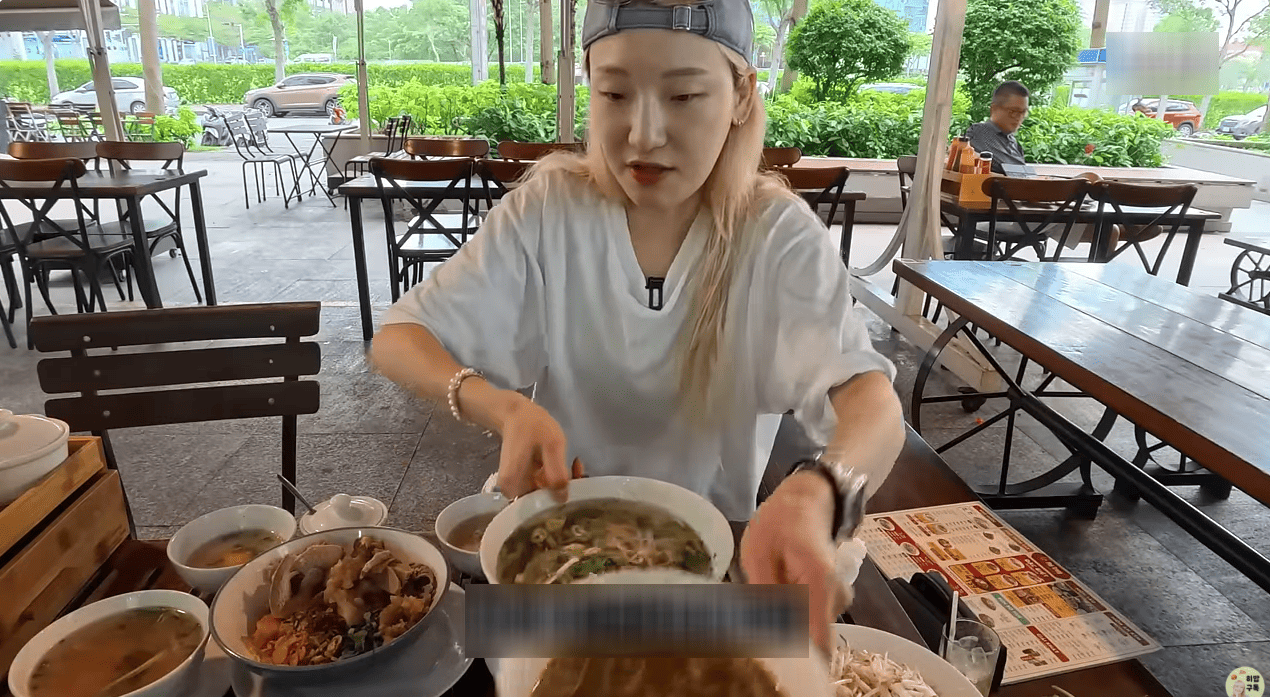
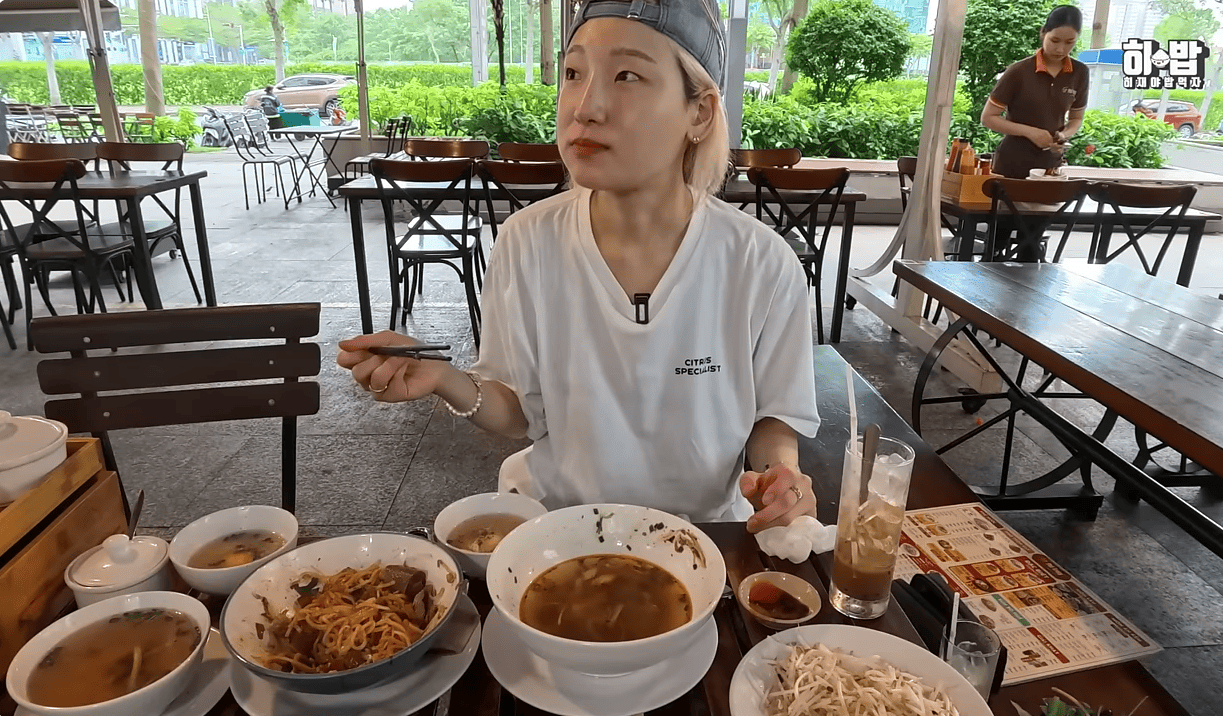
Visiting a few restaurants specializing in Vietnamese dishes in Seoul, Jongrak commented that some dishes have the same appearance as the original but the ingredients and flavors have changed.
Jongrak Choi, from Seoul, first traveled to Vietnam in 2018 and since then he has regularly traveled between Korea and Vietnam to produce content about culinary culture posted on his personal YouTube channel.
Jongrak said he had traveled most of Vietnam, also experienced many typical dishes of the three regions and had a great love for Vietnamese cuisine.
When he returned to Korea in early February, craving Vietnamese food, he visited a few restaurants specializing in serving Vietnamese food in Seoul, and found that every restaurant was crowded.

"Not all restaurants serve standard Vietnamese dishes. Some places adjust ingredients and spices to suit Korean tastes," Jongrak said.
The first address he visited was Qua restaurant, near Seoul Forest Park, specializing in serving Vietnamese dishes from three regions. Jongrak ordered a three-course set including beef pho, bun cha and Nha Trang pancakes, priced at nearly 40 won (700,000 VND). Each table in the restaurant has instructions for eating pho and bun cha in Korean.
He commented that the grilled spring rolls were small in size and not the same taste as the Nha Trang grilled spring rolls he had eaten. Banh Xeo is not the same as the Central version, but is as big as Banh Xeo in the West. The vegetables served with banh xeo and grilled spring rolls are quite limited, only lettuce, green mango and cucumber. The dipping sauce is not sweet and sour fish sauce like in Vietnam.
When trying bun cha, Jongrak discovered that the dish uses pho noodles instead of vermicelli. He jokingly calls this dish pho cha. The dipping sauce and meat patties have a flavor quite similar to the original version in Hanoi, served with fried spring rolls.

The next dish is beef pho, which has the same "appearance" as the original dish but the flavor and noodles are different. Jongrak said the broth does not have a strong cinnamon flavor, and the pho noodles used are dry, not fresh like in Vietnam. Because in Korea there is no facility specializing in the production of fresh pho, most Vietnamese restaurants import dry pho, which can be stored for several months, is milky white, has fine fibers and is chewier.
"The pho dish does not serve lemon and chili garlic vinegar with it," Jongrak said, adding that the price of lemons in Korea is quite high, about 100,000 VND for three fruits. Shops often use yellow lemons instead of green-skinned lemons like in Vietnam.
According to male tourists, at Vietnamese restaurants in Korea owned by native people, most dishes look similar to Vietnamese cuisine but the taste is different from the original version. They are adjusted to suit local tastes, but what Jongrak worries about is that Koreans may mistake this flavor as a characteristic of Vietnamese food.
The second restaurant Jongrak visited was Cong 365, a famous Vietnamese restaurant in Seoul, owned by Vietnamese people. He ordered a combo of beef sandwiches and a small bowl of pho, costing about 50,000 won (900,000 VND). This restaurant's pho comes with a separate plate of coriander because many Koreans cannot eat this herb. The restaurant serves additional spices to eat with pho such as spicy chili sauce. Minced beef bread has a crispy crust and is filled with pate, pickles, and cucumber, quite similar to the Vietnamese version.
A Korean male tourist commented that the food at Cong 365 has a taste closer to original Vietnamese dishes because the owner is Vietnamese. Another Vietnamese restaurant Jongrak introduced during his trip back to his hometown is Vietnam Kitchen, specializing in serving Vietnamese food with a famous dish being roasted duck.
According to the food blogger's comment, Seoul not only has Vietnamese restaurants popping up all over the street, but also has its own street about 300 meters long, with many murals about Vietnamese life and Vietnamese-style restaurants and coffee shops. Quy Nhon street located in the center of West Itaewon neighborhood, Yongsan district, Seoul is a suggestion.
At the beginning of the street, there is a sign with the name Quy Nhon in 3 languages: Korean - English - Vietnamese. Quy Nhon Road was put into use in 2016 to celebrate the friendly relationship between Korea and Vietnam. Over the past 8 years, the Vietnamese atmosphere has been increasingly imprinted on this street, the space has changed, Vietnamese restaurants have grown so much that this area can be called "little Vietnam".
"Vietnamese cuisine has won the hearts of many Koreans, as evidenced by the fact that Vietnamese restaurants are everywhere and every restaurant is crowded," Jongrak said.
NoodleSaigon20 - The First Fresh Bun & Pho Noodles in Korea
At NoodleSaigon20, we firmly believe that selecting the right variety of rice is essential to crafting authentic and delicious bowls of bun and pho. We use carefully selected rice grains to produce fresh noodles that meet the highest quality standards, ensuring an exceptional culinary experience for our customers.
-
01. Traditional flavor, exceptional quality
-
02. International standard HACCP-certified factory (Hazard Analysis and Critical Control Points)
-
03. Advanced freezing technology for optimal preservation
-
04. Convenient and easier to prepare than dried noodles
-
05. Loved by international diners, exported to Korea, Japan, and beyond…
Our products are currently available for wholesale and retail in South Korea. You can order via Hotline or message us on Facebook: