(Dan Tri) - From a worker with an unstable income in Korea, Ms. Hoai Thu saved and borrowed money to open a pho restaurant with a revenue of more than 40 million won/month.
Vietnamese pho restaurant has "huge" revenue
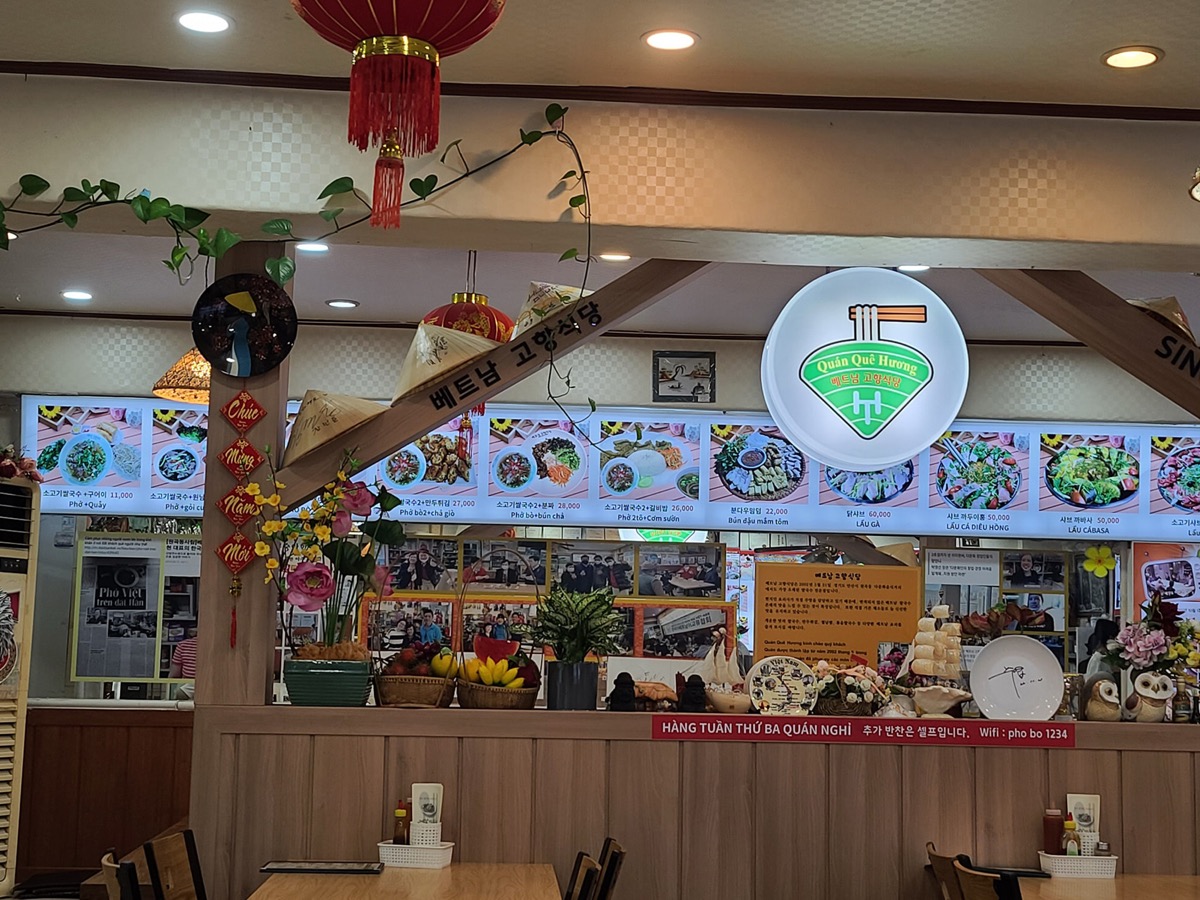
On a spring morning in Wongok-dong (Ansan City, Gyeonggi Province, Korea), the Vietnamese cuisine restaurant named Que Huong of Ms. Hoai Thu was soon crowded with customers.
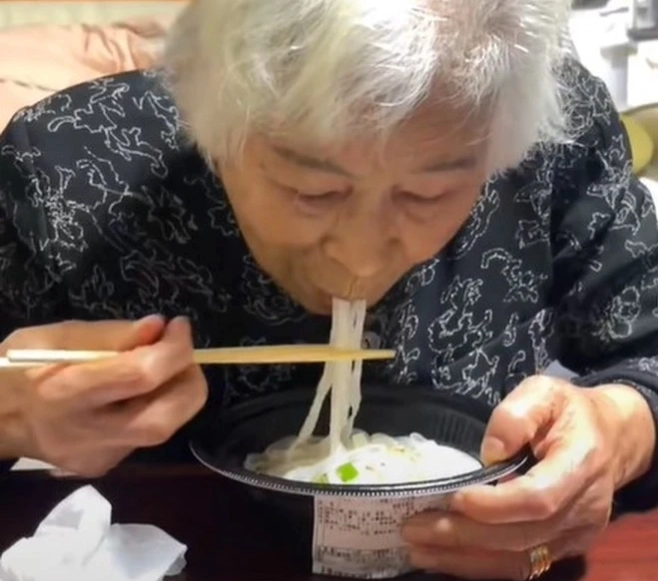
Enjoying a hot bowl of pho in the cold 6 degrees Celsius in the land of kimchi, many Korean diners suddenly gave her their thumbs up, praising "Vietnamese pho is the most delicious dish in the world".

Ms. Le Thi Hoai Thu (born 1973, native of Thieu Hoa district, Thanh Hoa province) started a Vietnamese cuisine restaurant in Korea for more than 23 years now. In addition to pho, Ms. Thu also offers more than 70 other Vietnamese dishes. Open from 10:00 a.m. to 10:00 p.m., the restaurant is 100 square meters wide, with 20 tables that can serve hundreds of customers every day.
Notably, 80% of regular diners are Koreans, the remaining few are Vietnamese and other nationalities. Every month, the restaurant's revenue can reach 40 million won (equivalent to more than 700 million VND).
Among the dishes, a bowl of pho costs 9,000-11,000 won (157,000-192,000 VND), accounting for the majority of revenue and helping her build the business she has today. According to Ms. Thu, pho is a dish that must be cooked meticulously to bring out the frugal flavor of famous Vietnamese cuisine.

Even though there are 3 employees always on duty, Ms. Thu still wakes up early every day and self-monitors the process from preparing the ingredients to bringing the bowl of pho to the table for customers to feel secure.
"Flavorings for cooking pho such as star anise, cinnamon... are all imported from Vietnam. Beef in Korea is famous so I import it directly to the restaurant to maintain freshness. I stew 10kg of beef bones a day, taking more than 12 hours to make the broth very frugal, good for the user's health," Ms. Thu said.
The strength of Vietnamese women
Recounting her career journey decades ago, Ms. Thu suddenly burst into tears and said, "I have conquered myself."
Ms. Thu is the youngest child in a farming family in the countryside of Thanh Hoa province. While her siblings are both civil servants and state employees, she chose to go to work early in life.
In 1994, she went to Korea as a trainee. At that time, Ms. Thu "didn't know a single Korean word broken in half", but could only babble a few sentences in English.
The work at the garment factory was difficult, and the cold weather caused the female worker's 10 fingertips to become numb. The first nights living away from her family, lying huddled in the dormitory with her body aching, Ms. Thu burst into tears because she missed home so much.

However, to prove that her decision was right, the Vietnamese woman wiped away her tears and gritted her teeth to endure in exchange for an income of 150 USD/month (equivalent to 3.8 million VND).
After 10 months of work, the female worker suddenly learned that the company had gone bankrupt. During the 2 months of waiting for support and working arrangements at the new company, Ms. Thu clearly remembers that she and other Vietnamese workers had to eat noodles instead of rice. Having no money to buy meat, the group had to ask the locals for help, asking farmers for vegetables to eat for the day.
"It was very difficult at that time, but once I went here, I couldn't go back," the female worker confided.
Luckily enough to survive the difficult period, Ms. Thu was introduced to another textile company. Female workers realize that the language barrier unintentionally puts themselves in a disadvantaged position in both work and life. Therefore, she was determined to change.
She asked a local male colleague who could communicate in Vietnamese to teach her Korean. In the evening, returning to the dormitory, Ms. Thu flipped through her books and reviewed her lessons. In the morning at the factory, she tried every way to communicate with colleagues and superiors to practice. Soon, she overcame her biggest fear.

In 1997, she got married, quit her job and stayed home to take care of her children. At the same time, the Asian financial crisis made her husband's work difficult. Hoping to help some of her husband's hardships, Ms. Thu came up with the idea of opening a Vietnamese restaurant.
"My husband advised me as much as possible because he was afraid that it would be very difficult for me to take care of the children and sell goods at the same time. But at that time, the area I lived in had never had a Vietnamese restaurant, and the local people loved pho, so I thought I should not miss this opportunity," Ms. Thu shared.
In 2002, the female worker borrowed $20,000 from her sister to open a restaurant. She learned how to cook pho from her father, then went on her own to find premises and source ingredients.
When she first started her business, Ms. Thu only slept 4 hours a day, and some days she fell asleep on the floor. She even had to ask her neighbor to look after her children because she was so busy. Her husband goes to work in the morning and comes home at night to help his wife wash dishes and clean up.
Thanks to its rich flavor, Ms. Thu's pho attracts many diners. In particular, since appearing on MBC's "Hot Topics" program in 2005 and channels OBSTV, MBN..., the pho restaurant has become more and more crowded. Many people come here on peak days, willing to wait more than 30 minutes in the freezing cold just to eat a warm bowl of pho.
The owner said that in 2015, after appearing on tvN's "Wednesday Night Food Stories" program, the restaurant also achieved revenue exceeding 80-90 million won/month (about 1.4-1.5 billion VND). It is known that Ms. Thu once opened 3 more branches but had to close 2 restaurants due to the impact of the Covid-19 epidemic.

"Looking back on my past journey, I think I was successful because I never thought about giving up. The pho restaurant not only helped my husband and I have a better life, but also created jobs for family members on both sides. Therefore, any effort you put in will be rewarded," Ms. Thu said enthusiastically.
NoodleSaigon20 - The First Fresh Bun & Pho Noodles in Korea
At NoodleSaigon20, we firmly believe that selecting the right variety of rice is essential to crafting authentic and delicious bowls of bun and pho. We use carefully selected rice grains to produce fresh noodles that meet the highest quality standards, ensuring an exceptional culinary experience for our customers.
-
01. Traditional flavor, exceptional quality
-
02. International standard HACCP-certified factory (Hazard Analysis and Critical Control Points)
-
03. Advanced freezing technology for optimal preservation
-
04. Convenient and easier to prepare than dried noodles
-
05. Loved by international diners, exported to Korea, Japan, and beyond…
Our products are currently available for wholesale and retail in South Korea. You can order via Hotline or message us on Facebook: